
What Blocks Brain Recovery After Stroke: The Exposures Nobody Tests For
Introduction
In 1987, Dr. Robert Hedaya found an office he loved. It overlooked a stream and a forest, and it had a balcony. Within about an hour of arriving each morning, he would become tired and mentally foggy, something he describes as unlike him. It took him time to work out what was happening. The building had mold.
He is a Clinical Professor of Psychiatry at Georgetown University Medical Center and a pioneer of functional medicine psychiatry. He had spent his career studying why brains underperform. And he still didn’t see it until it was affecting him personally.
That story is worth sitting with, because it goes to the heart of a question most stroke survivors eventually ask: if I’m doing the therapy, the exercises, the sleep, the diet, why am I still stuck?
Why this question matters more than any rehab program
When Dr. Hedaya returned to Recovery After Stroke for his third conversation with Bill Gasiamis, the topic was not a new treatment. It was the opposite: the things that get in the way of treatments already working.
His argument is structural. After a stroke, the brain rebuilds by growing new connections between neurons. That process is physical. It requires materials, energy, and an absence of interference. If something is interfering, no amount of repetition in a rehab gym will overcome it.
So the useful question is not only what helps my brain recover but also what blocks brain recovery after stroke and whether any of it is happening in your own house, your own mouth, or your own bloodstream without anyone having looked.
Dr. Hedaya raised three: mercury, mold, and Lyme.
Mercury: how a metal stops neurons from branching
Picture a neuron as a tree in winter: a trunk with branches extending outward. After a stroke, under the right conditions, neurons grow new branches to make new connections.
To do that, the cell has to lay down a structure for the new branch to grow through. It uses a protein called tubulin, small oval molecules that link together into a tube, the way Lego pieces connect to form a ring.
Mercury interrupts that linkage. Dr. Hedaya points to footage from the University of Calgary, filmed in 1999, showing the process under a microscope: the growing nerve branch shrivels and retracts within seconds of mercury exposure. It runs about two and a half minutes and is worth watching, because seeing it is more persuasive than reading about it.
Where does mercury come from? Two main sources. Dental amalgam fillings, the dark grey ones, were largely phased out from roughly the 1970s onward, which means people now in their fifties and sixties are the most likely to still have them. And fish. Mercury accumulates up the food chain, so large predatory fish such as tuna and swordfish carry substantially more than small fish. Sardines, anchovies, herring, and mackerel carry very little, and bring DHA and B12 with them, the raw materials neurons need.
Testing involves a baseline urine sample, then a challenge dose of DMSA (a sulfur-containing compound), then a second sample. A jump between the two indicates mercury was being stored and is now being pulled out.
If you have amalgam fillings removed, Dr. Hedaya is emphatic that it should be done by a biological dentist who follows a protocol: preparation with sulfur-containing compounds beforehand, a dam in place during the procedure, and rinsing afterward. Removal done badly can expose you to more mercury than leaving it alone.
Mold: the ceiling Dr. Hedaya says he has never seen broken
This is his strongest claim, and he states it without hedging: he has not seen anyone fully recover from a neurological problem while living in a mold-exposed environment. His estimate of the ceiling is around fifty percent improvement.
There are two separate things at work. The spores the visible organism. And the mycotoxins, which are molecular, airborne, invisible, and travel far beyond the patch you can see. They inhibit mitochondria, which is how cells produce energy, and they increase oxidation, which is hard on neurons.
You cannot rule mold out by smell or by looking. Dr. Hedaya has every patient run an ERMI test Environmental Relative Mold Index. You mark ten areas in the home that don’t get cleaned, wipe them down, leave them for a month, then collect dust with a supplied cloth and send it to a lab. He uses Mycometrics.
The second test asks a different question: is your immune system actually reacting? A lab such as MyMycoLab measures IgE (an immediate response, within minutes to hours) and IgG (a delayed response that can begin a day or two later and persist for weeks). You then compare which molds are in your home against which ones your immune system is responding to: Aspergillus, Cladosporium, Chaetomium, Stachybotrys, and others. In Dr. Hedaya’s experience, the two lists usually overlap.
Remediation is where it becomes expensive and inconvenient. Cleaning the visible growth achieves little on its own. You have to find the water: poor grading, a roof leak, blocked downspouts, a badly installed HVAC system, damp ductwork, because if the water source remains, so does the mold.
As Bill put it in the conversation: there is no point putting a year of work into a rehabilitation program and then walking out of it into a moldy house. The cost of remediation is real. So is the cost of never getting past fifty percent.
Lyme disease: the great imitator
Lyme is a close relative of syphilis, which was historically called the great imitator because it could present as almost any disease. Lyme behaves the same way, and a single tick can carry around twenty pathogens that affect humans, including Bartonella and Babesia, both of which drain cellular energy.
Dr. Hedaya’s issue is with the testing. It relies on antibodies, and antibodies take weeks to develop, so testing soon after a bite returns a negative that means nothing. The result is also reported as a binary against an optical density threshold: above the cutoff you have it, below it you don’t. His comparison: a blood glucose of 120 is not diabetes; 121 is. The line does not reflect biology.
He also rejects the common reassurance that a tick embedded for under 24 hours is safe. His word for it was “insanity.”
Where to start
Asked which of the three to address first, his answer was immediate: mold.
Mercury needs no test to begin acting on; switch to smaller fish, eat more cruciferous vegetables, garlic, cilantro, and greens, and you are doing something useful whether or not you had a problem. Test in six to twelve months if you want to know.
Lyme comes last, unless you have had a recent tick bite. And mold has to be dealt with before Lyme treatment is worth attempting.
How to raise this with your doctor
Dr. Hedaya’s advice here is practical, and it applies well beyond this topic. Don’t arrive with a theory. Arrive with a literature review.
He suggests using SciSpace over PubMed; ask it for a literature review on the effects of mold on the human nervous system, and it will assemble one in fifteen or twenty minutes. Print it, along with a couple of the underlying papers.
Then add the step most people skip: ask it for the counter-argument. Ask why mold might not be a factor in brain function. You are not there to win. You are there to have a real conversation, and a doctor is far more likely to engage with someone who has already tested their own position.
If they refuse outright to order the testing? His view was blunt: find another doctor.
Getting out of your own way
None of this replaces rehabilitation. It removes the obstacles to it.
That distinction matters, because the work you are already doing is not wasted; it may simply be running into something invisible. Checking your fillings takes a minute and someone willing to look in your mouth. Testing your house takes a month and a cloth. Neither is a treatment. Both are ways of making sure the treatment can do its job.
This is the third conversation with Dr. Hedaya on this show. The first covered photobiomodulation and laser therapy (https://recoveryafterstroke.com/photobiomodulation-stroke-recovery/). The second covered hormones, thyroid function, and fatigue (https://recoveryafterstroke.com/hormones-and-stroke-recovery-dr-robert-hedaya/). Both are useful companions to this one.
If you want a fuller framework for thinking about recovery, Bill’s book The Unexpected Way That A Stroke Became The Best Thing That Happened walks through ten tools for recovery and personal transformation. You can find it at https://recoveryafterstroke.com/book.
And if this show has helped you, you can support it financially at https://patreon.com/recoveryafterstroke.
Footer Disclaimer
This blog is for informational purposes only and does not constitute medical advice. Please consult your doctor before making any changes to your health or recovery plan.
Related links:
Dr. Hedaya’s practice
First conversation, photobiomodulation
Second conversation, hormones
The mercury video, University of Calgary
Background on that video
ERMI mold testing lab
Mould antibody blood testing
Tick-borne and Lyme testing
Literature reviews in minutes
Research database
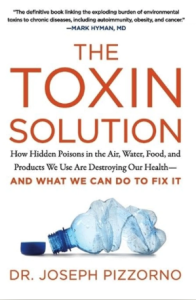
The toxins textbook he mentions