Photobiomodulation Stroke Recovery: How Laser Therapy Is Restarting Damaged Brains After Stroke
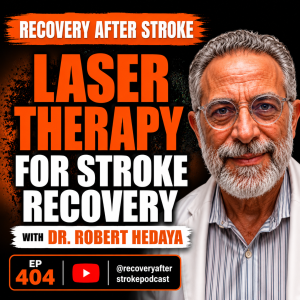
For seven years, a woman lived unable to remember faces. She had developed prosopagnosia, a condition that turned every person she met into a stranger, no matter how many times they had been introduced. She kept notes. She took photographs. She built systems to compensate for what her brain could no longer do on its own.
Then she sat down for a single laser therapy session with Dr. Robert Hedaya. One session later, the problem was gone.
“I can remember the face of the person I worked with this morning and his wife and the dimple on his face,” she told him, describing something she hadn’t been able to do in nearly a decade.
What Dr. Hedaya witnessed that day and what he now works to replicate for stroke survivors, people living with aphasia, early dementia, and Parkinson’s, is the result of a therapy called photobiomodulation. And the principle behind it may fundamentally change how you understand your own recovery ceiling.
Your Neurons May Not Be Dead. They May Just Be Stuck
When a stroke occurs, conventional medicine draws a clear line. Tissue that is destroyed is gone. Deficits that persist beyond the early recovery window are considered permanent. Survivors are told, sometimes gently, sometimes bluntly, that they have plateaued.
Dr. Hedaya challenges that directly.
In his clinical experience, there is often a population of neurons that survived the stroke intact but are no longer functioning. They are alive. Their cellular architecture is preserved. But they have lost their energy supply, specifically, the ability to produce ATP, the molecule that powers every cellular process in the body. Without energy, these neurons go quiet. They stop firing. From the outside, this looks like permanent damage. But it isn’t. It is dormancy.
This mirrors the concept of the chronic penumbra explored in hyperbaric oxygen therapy research, where viable tissue sits in a suspended state, waiting for conditions to change. Dr. Hedaya’s approach is different in method but identical in premise: the brain has not finished recovering. It is waiting for the right signal. Photobiomodulation provides that signal.
What Photobiomodulation Actually Does
“After the first laser treatment, the problem was gone. Gone. She told me — I can remember the face of the person I worked with this morning.” — Dr. Robert Hedaya
Photobiomodulation, also called transcranial laser therapy, delivers precise wavelengths of near-infrared light to targeted areas of the scalp. The photons penetrate through the skull, meninges, and tissue to reach dormant neurons, where they act on the fourth complex of the mitochondrial electron transport chain, the site where nitric oxide accumulates and blocks ATP production.
The photons dislodge that nitric oxide. The mitochondria resume normal energy output. The neuron now has what it needs to resume its function.
The downstream effects are significant: new synapses form through a process called synaptogenesis, brain-derived neurotrophic factor (BDNF) is produced, inflammation decreases, and misfolded proteins associated with cognitive decline begin to clear. Given energy, the brain begins repairing itself, not because the laser forces it to, but because the cells already know what to do. They were just waiting for the fuel.
How QEEG Makes It Precise
Not every stroke survivor responds to the same laser parameters or needs treatment in the same regions. This is where Dr. Hedaya’s approach clearly separates from consumer LED helmets or generic light therapy devices.
Before any laser is applied, he conducts a quantitative EEG, a brain mapping process that measures electrical activity at 19 points across the scalp. Unlike a standard EEG, which relies on a clinician reading scrolling waveforms visually, QEEG uses AI to analyse thousands of data points and reverse-engineer the source. The result is a functional map: which networks are underperforming, which are overactive, and where pathways between regions have broken down.
This is paired with a neuroquant MRI that measures 30 to 40 distinct brain structures volumetrically. Together, they function as a GPS triangulating exactly where the laser should be directed, at what wavelength, power, pulse frequency, and joule delivery for each individual patient. These parameters are adjusted as the patient responds, session by session.
This level of precision is what distinguishes clinical photobiomodulation from anything available over the counter. A half-watt LED helmet delivering diffuse light through hair and scalp is not the same intervention.
Depression After Stroke – And the Whole-Body Connection
Roughly 30% of stroke survivors experience depression in the aftermath. This is not simply an emotional response to a difficult event – it is a physiological outcome with identifiable drivers that conventional psychiatry often does not investigate.
Dr. Hedaya’s model, which he calls whole psychiatry, treats post-stroke depression as a downstream expression of broader disruption: hypothyroidism, hormonal imbalance, B12 deficiency, elevated mercury from dietary sources, gut dysbiosis, chronic inflammation, and unresolved neurological stress all play measurable roles. In one of his current stroke cases, treating low thyroid function triggered seizure sensitivity because post-stroke tissue is more vulnerable to excitatory input. That kind of complexity is precisely why a comprehensive functional evaluation must precede treatment.
For survivors too depleted to engage with lifestyle changes, Dr. Hedaya will now often begin with laser therapy directly. Once cellular energy is restored, the motivation and capacity to make further changes typically follow. The jump-start, he has found, enables everything else.
Is Recovery Still Possible After a Plateau?
If you have been told you have reached your ceiling, the core message of this episode is worth sitting with: the plateau is often not a biological fact. It is frequently the consequence of underlying conditions that haven’t been identified, and dormant tissue that hasn’t been activated.
“The brain is incredibly plastic,” Dr. Hedaya says. “When you challenge it and give it everything it needs, nutrients, light, hormones, and remove the toxins, great things can happen. There is hope. There is so much hope.”
His practice, the Whole Psychiatry and Brain Recovery Center, offers initial consultations via Zoom for those who cannot travel to New Jersey. For survivors with a local physician willing to collaborate, educational consultation is also available. Reach Dr. Hedaya at wholepsychiatry.com.
If this episode opened something up for you, Bill’s book – The Unexpected Way That A Stroke Became The Best Thing That Happened follows the full arc of what recovery can become when you stop accepting the ceiling and start questioning it. Find it at recoveryafterstroke.com/book.
If the Recovery After Stroke podcast has supported your journey, you can support the show at patreon.com/recoveryafterstroke.
This blog is for informational purposes only and does not constitute medical advice. Please consult your doctor before making any changes to your health or recovery plan.
The Laser That Restarts Brains – Dr. Robert Hedaya on Photobiomodulation, QEEG, and Whole Psychiatry After Stroke
A laser pointed at the right spot in your brain can restart neurons that stopped working. Dr. Robert Hedaya explains how and who it can help.
Hyperbaric Oxygen Therapy – Dr. Amir Hadanny
Highlights:
00:00 Introduction – Photobiomodulation Stroke Recovery
01:09 Dr. Hedaya’s Medical Journey
07:55 Transition to Functional Medicine
10:31 Photobiomodulation Stroke Recovery Applications
19:21 Understanding Laser Mechanisms
24:36 Jumpstarting Healing with Laser Therapy
29:48 Understanding EEG vs. QEEG
34:10 Addressing Depression Post-Stroke
39:38 Holistic Approaches to Recovery
46:20 Patient-Centered Care and Follow-Up
51:38 The Role of Spirituality in Healing
Transcript:
Introduction – Photobiomodulation Stroke Recovery
Dr Bob Hedaya (00:00)
After the first laser treatment, the problem was gone. Gone. She told me, she said, my God, I can remember the face of the person I worked with this morning and his wife and the dimple on the face. And I said, what are you talking about? She says, have prosopagnosia. I said,
says, can’t remember faces. I have to write down everything that I do and take pictures of everything and every person. I said, my God, it’s gone, gone. that’s when I went home that night and I was like, this doesn’t make any sense. How could this be? There’s nothing about a neurological condition being turned around in one minute. It makes no sense.
Dr. Hedaya’s Medical Journey
Bill Gasiamis (00:41)
Welcome everyone to the Recovery After Stroke podcast. I’m Bill Gasiamis and my guest today is Dr. Robert Hedaya, a board-certified psychiatrist, functional medicine practitioner, and the founder of the Hull Psychiatry and Brain Recovery Center in New Jersey. Dr. Hedaya trained at Georgetown and the National Institute of Mental Health. And over the course of his career, he moved from conventional psychopharmacology into functional medicine after discovering
of what was driving his patient’s symptoms had nothing to do with their medications and everything to do with their biology. In more recent years, Dr. Hedaya has added a tool that very few practitioners anywhere in the world are using, QEEG, guided transcranial photobiomodulation. That’s laser therapy, precisely
using a functional brain map to reactivate neurons that survived the stroke but stopped working. In this conversation, we get into the science behind photobiomodulation and what it actually does inside the cell. How QEEG brain mapping removes the guesswork from treatment, why post-stroke depression is so often mismanaged, the role of nutrition, hormones, and toxin load in recovery.
and why Dr. Hedaya believes the plateau most survivors are told about is not the biological sealing they’ve been led to believe it is.
Now, before we get into this episode, if you found this podcast helpful in your recovery, my book, The Unexpected Way That a Stroke Became the Best Thing That Happened goes deeper into the tools and mindset shifts that support long-term recovery and personal transformation. You can find it at recoveryafterstroke.com/book. And if this show has supported you, you can support it at patreon.com/recoveryafterstroke. Now let’s get into it.
Bill Gasiamis (02:38)
Dr. Hedaya.
Welcome to the podcast.
Dr Bob Hedaya (02:41)
Thank you. Pleasure to be here.
Bill Gasiamis (02:43)
It is a very good pleasure to have you here as well. The reason being is because I, what we’re going to discuss, but B the way that you came to be on my podcast was through somebody who listens to my podcast, reaching out and saying, need to have this gentleman on your podcast. And I get that a lot. And sometimes it’s like, thank you for the referral, but maybe that’s not for me, but this is definitely for me. Can you give me a little bit of.
Dr Bob Hedaya (03:01)
Mm-hmm. Mm-hmm.
Bill Gasiamis (03:13)
background for people who are listening to understand how it is that you and I came to be on the podcast today, but more importantly, like your medical journey to today.
Dr Bob Hedaya (03:26)
Well, so first of all, I ⁓ was treating a woman who was, let’s say, about 50 years old. She had several strokes. And her husband looked me up, and they came here for treatment. in New Jersey. And ⁓ she had significant improvement in her ability to speak over a short period of time. That’s a little.
kind of summary of the situation, but it was ⁓ profound. She still has work to do, a lot of work to do, but she’s doing it and she’s progressing nicely. So that’s, he basically, I guess, decided this needs to get out. And so he contacted you, et cetera, et cetera. In terms of my journey, ⁓ that could take a few hours. So let me try and summarize it.
I will say I basically went to medical school, took off six months to study medicine on my own after two years because I really, lot of reasons, but one of them was I just was memorizing things and I didn’t really understand what I was doing. And so I took off six months and I really learned about the human body. I studied, I had a schedule, a very fixed schedule, about 10 hours a day of studying and exercise and eat. was very, you know, I was young and regimented.
And I had six books, six subjects that I wanted to get through and I did. And I learned all about the body and different parts of the body, how they interact with each other. And also I was able to understand and predict even certain kinds of processes and problems in the body. So that was an integrative experience, which ⁓ later really served as the foundation for what I do. Fast forward, I was going to be a surgeon, decided to be a psychiatrist instead, because I was fascinated by
by the human mind. And what happened was I was trained at Georgetown National Institute of Mental Health in Washington, DC. And then I was in practice for about a year. And I was treating a woman who had panic attacks. And they weren’t getting better after a year. And panic attacks are pretty easy to treat. And so I was like, what’s going on here? She paged me one night after a year, Saturday night.
And I remember I had a little beeper, you know, and I went to find a phone booth and, hey, Joanne, what’s going on? It’s midnight, right? She’s talking to me, I’m having a panic attack. And I mean, I still remember the anguish in her voice. You know, it was really, really, really rough to listen to. So Monday morning, I went into the office very early and I’m like, I’m missing something. What am I missing? So I found I had one piece of blood work. had a blood count and the size of her red blood cells was large.
and I had seen that and didn’t know what it meant and ignored it. Very little. It wasn’t very large. It was just a little bit out of the norm. And I was trained in hospitals. know, in hospitals, you don’t worry about the little things. You worry about the train wrecks, right? So you never really learn what the little things mean. So here was a so-called little thing and it was ruining her life. Meanwhile, I did some research. It was a B12 deficiency. I gave her B12 injection. And with the first injection, her panic was gone.
Transition to Functional Medicine
I mean, gone, gone, gone. And I was like, whoa, what else am I missing? Because psychiatry, neuropsychiatry, it’s a revolving door. You go to this doctor, you take these meds, you do this therapy. That works for a while, then you go somewhere else. I figured I’m missing a lot of stuff. And basically, ended up learning. I didn’t know it was called functional medicine, but I ended up learning functional medicine on my own. Wrote a book, got introduced.
to Jeff Bland at IFM. contacted me and took formal training and then, you know, that was what I was doing. And I did that, ⁓ put out a second book ⁓ and that was a best seller. And ⁓ the book was called the Anti-Depressant Survival Program. But really it was functional medicine psychiatry or whole psychiatry, which I like to call it. But it’s functional medicine psychiatry, but the publisher wanted…
you know, a nice fancy title that would, know, so they decided to call it the Anti-Depressant Program, you know, survival program. Anyway, the best seller and we had thousands of phone calls, we had a lot of publicity and I couldn’t obviously see everybody. So I picked people who had treatment resistant depression and people who had the resources and the motivation or the support to be able to do what they needed to do.
And I just treated them with functional medicine. And at this time, you’ve got to realize I was a psychopharmacologist. I was also trained as a psychopharmacologist. So I was doing a lot of psychopharmacology. I mean, a lot. And now I’m doing functional medicine on everybody. And after about three years, I’m noticing that I’m not actually doing that much psychopharmacology anymore. And everybody’s getting better. And the diabetes is going away.
and osteoporosis is going away and one woman’s MS lesion in her brain went away and I’m like, what’s going on here? You know what? I might be lying to myself. So maybe I’m paying attention to the positive cases and I’m ignoring the negative. So I hired a statistician to go over all my cases over the course of this period of time, it two or three years. Ended up in 23 cases of treatment resistant depression. ⁓
I wasn’t lying to myself. Every single person went into recovery, not partial remission, not 50 % better, fully recovered by 10 months, every single one. And I was just blown away that, you know, I mean, I was blown away before, but then it was like, well, you’re not really lying to yourself. So that’s what I was doing until 2014 when I retired. I had actually an inaccurate diagnosis. I retired and…
turned out it was incorrect. So it was actually really good to be retired, although I missed it terribly, really missed medicine terribly. But it gave me some time. And this is where this kind of starts to relate more to your audience. ⁓ I’m sitting on a hammock for six hours reading a book. Well, you can’t do that when you’re in practice.
Bill Gasiamis (10:07)
Good thing to do.
Yeah.
Photobiomodulation Stroke Recovery Applications

Dr Bob Hedaya (10:13)
That doesn’t happen. So but I was you know in retirement, so I’m reading this book and put two and two together over the course of time and I learned about laser which which they were using in Russia in 1980s and learned how the laser worked and And I was like whoa this could really help the brain and Then I was thinking now. I’m not in practice right, but I’m then I’m thinking but how would I know where to?
point the laser in the brain for a patient. And then I keep reading in the book, and then they start talking about in the next chapter about quantitative EEG. And I’m like, oh, that’s how I would know. So I spent the next three years or so actually studying these methodologies. And then in 2017, I want to say, or 2018, I treated my first patient who had early dementia.
published this case actually. I was treating her for early dementia. And I had treated her for six months with functional medicine, know, hormones and treating infections, et cetera, et cetera. And she really was much better. And then I was ready to do my first quantitative EEG. And she’s doing much better. She still has some symptoms. And I do the QEG. And actually, if I could share my I don’t know if I can,
Okay, so basically what I just sent you is ⁓ how her brain looked after six months of functional medicine, right? So I was shocked because I thought her brain would look much better. And then I said, okay, let’s do the laser. So I knew where to point it because the QEG and this was the shocker. With the first laser, she had a problem.
before the laser treatment of facial blindness. I don’t know if you know what that is. It’s people who can’t remember faces. They just met someone, they can’t remember the face. It’s called prosopagnosia. She had acquired it seven years earlier.
Bill Gasiamis (12:11)
I do.
Yeah.
Dr Bob Hedaya (12:21)
After the first laser treatment, the problem was gone. Gone. She told me, she said, my God, I can remember the face of the person I worked with this morning and his wife and the dimple on the face. And I said, what are you talking about? She says, have prosopagnosia. I said, what?
What is proto-diagnosia? I don’t know what that is. She says, can’t remember faces. I have to write down everything that I do and take pictures of everything and every person. I said, my God, it’s gone, gone. that’s when I went home that night and I was like, this doesn’t make any sense. How could this be? There’s nothing about a neurological condition being turned around in one minute. It makes no sense.
But then I realized, I reasoned it out, realized, well, she had a population of neurons that were kind of alive, but they were not really functioning. And then I kind of jump started them with the laser and they went about their business and did their job.
Bill Gasiamis (13:19)
I love it. So, that’s a contrast on what you’re doing as in psychiatry, because psychiatry from, you know, my understanding is, you know, if you, if you speak to somebody who’s been through psychiatry and you ask them, how’s your condition or how is your situation or what has improved, very few people can say, ⁓ well, I’m, I’m better. I’ve overcome it. We’ve moved beyond the resolve that
Dr Bob Hedaya (13:27)
Yeah.
Bill Gasiamis (13:47)
Nobody really does that. They kind of just continue to go through the motions of another appointment, another medication, another adjustment in the amount of medication, et cetera. And what you said also seems a little bit ridiculous and kind of too quick. How do you get that kind of a solution that’s meant to take ages? You’re supposed to go through the typical times and it’s supposed to be costly and
Dr Bob Hedaya (14:06)
Too quick.
Bill Gasiamis (14:16)
unattainable and all these things. And it makes people feel sometimes I know stroke survivors who come across promises like that from other ⁓ people who talk about ⁓ perhaps ⁓ non-studied, ⁓ no scientific background kind of solutions to stroke and then kind of give everyone a blanket. If we do this, we’ll fix your stroke deficits, which is not true. ⁓ And then
And then it leaves people feeling like they got ripped off. If they paid money, it leaves people lost for hope that there is no hope, cetera. And we kind of find ourselves in a, okay, desperate, what do we do now situation, right? And that’s kind of why I got excited when your patient’s husband reached out and said that we should chat. And I had a bit of a look into the kind of work that you do. ⁓ Functional medicine, I’ve heard about heaps.
Dr Bob Hedaya (15:00)
Hmm.
Bill Gasiamis (15:14)
And I love that it’s merged with psychiatry because when I started my journey in 2012, overcoming the first brain bladed and the second brain blade six weeks later, I went into functional medicine study to find out not formally, but I started doing what I didn’t know at the time was studying functional medicine and understanding like how I can decrease the inflammation in my brain.
and provide the right environment for healing. And the first thing I came across was a book by somebody that you’re gonna know, Mark Hyman. And the book was, ⁓ the book was, ⁓ Eight Fat Get Thin. I read it, not wanting to get thin, I read it ⁓ because it ticked the boxes for the diet that I was gonna use to reduce inflammation in my brain.
Dr Bob Hedaya (15:54)
Okay.
Bill Gasiamis (16:12)
And the side effect was I thin. I wasn’t going for that because I was taking medication. was taking ⁓ dexamethasone, which made me put on weight and made these like all these types of ⁓ terrible side effects, but it was helping reduce the inflammation in my brain. So I, I was happy to have it, but I needed to achieve the same outcome as dexamethasone.
Dr Bob Hedaya (16:13)
I’m kidding.
Bill Gasiamis (16:41)
or a similar outcome as dexamethasone on a permanent basis without taking dexamethasone to improve the situation in my brain. And then I started to realize that I had a lot of power and I was ⁓ only not guided properly because my physicians, my doctors weren’t able to offer advice in that space. And had I not been the curious kind of guy that I was, I never would have come across Dr. Hyman and some
other amazing guys who wrote books at around about that time that were similar in nature. so you’re, and then, and then a little while later, I found there was a Tasmanian, ⁓ psychiatrist, forget her name, but I have her book on my shelf upstairs who wrote a book about, ⁓ psychiatry and food and, the link between food and a good psychiatric outcome.
Dr Bob Hedaya (17:15)
huh.
Bill Gasiamis (17:39)
in the brain. And I just thought, okay, there’s much, much more that needs to happen here. Now, this the connections, there’s a lot of connections here. So recently on my YouTube channel, somebody left a comment I wanted to know about red light therapy, and will it help their brain? And I’m like, I have no idea. But let me do some research. I went on to PubMed, I found some articles and wouldn’t you believe it, there is a whole bunch of ⁓ proper data that
Dr Bob Hedaya (17:40)
You know what? Come on.
Bill Gasiamis (18:08)
suggests that there is a benefit. The only challenge that I always have with all of these potentially beneficial interventions is there’s no diagnosis done in the first place to determine whether somebody actually is eligible for a particular intervention. And what it sounds like you’re able to do is the diagnostics part and determine their eligibility. Tell me a little bit about why that is important.
Dr Bob Hedaya (18:35)
Right.
Okay, so let me back, I wanna back up, because you said something very important, then I wanna reiterate it. I just gave you before a case of a woman who in five minutes, her problem was gone, right? Not, people should not think that’s the norm, okay? Not the norm. Occasionally it happens, I have a guy who had a head injury and had light sensitivity and confusion in certain situations with light, and one treatment, boom, gone.
Understanding Laser Mechanisms
People, you know, I have cases like that, but most of the time this is a gradual process. So people should not think it’s a cure-all for everybody. We do have to know who it’s good for. So what we do diagnostically before we do this is I will look at their brain, you know, obviously take some history and all of that business, but we do a quantitative neuroquant MRI. So we look at the different structures inside the brain. You know, we look at…
Bill Gasiamis (19:32)
Lovely.
Dr Bob Hedaya (19:32)
30, 40 different structures. And then we also do a quantitative EEG, which is an electroencephalogram. We measure the electricity in the brain in 19 different places. And then there’s this really AI that takes all this data and it reverse engineers it. It’s called the inverse solution. And you can actually see the pathways, all of the pathways in the brain and the surface areas of the brain. And you can look at that, correlate that with the person’s symptoms.
with the neuroquant MRI, it’s like a GPS, right? A triangulation of information and then assuming there’s not a mass or an aneurysm or some reason not to do the laser like an overactive brain or something like that, then we could consider using the laser. And then we also know where we want to do it based on the symptoms, based on the QEG, based on the neuroquant. We will decide what we’re going to target. And then we combine that, sometimes, not always.
Bill Gasiamis (20:05)
Hmm.
Dr Bob Hedaya (20:31)
with neurofeedback so we can exercise the areas that we want to exercise or calm down the areas that we want to calm down. And sometimes with hyperbaric oxygen, things like that. And hormones, using hormones or things like that.
Bill Gasiamis (20:42)
Yep.
Hyperbaric oxygen has been a topic that I’ve discussed as well on the podcast and the people that I spoke to about hyperbaric oxygen and guys, I can’t remember right now, but I’ll put a link in the show notes for anyone listening so that you can go and find that episode and have a listen to it. Basically, what I loved about their approach was that they did a massive amount of diagnosis beforehand to determine where the penumbras were and then target those penumbras while the person was in the chamber.
by getting them to do certain exercises that would activate those areas and therefore be targeted. So it sounds like the laser therapy is similar. Tell me about the laser. What kind of a laser is it? How does it get targeted to a specific spot? And what does it do when it goes there? I mean, I imagine it just doesn’t point there and go, I’ll illuminate that and it’ll be better. How does it actually work?
Dr Bob Hedaya (21:18)
Mm-hmm. Mm-hmm.
Okay, so the laser, there are a bunch of different parameters that we have to adjust for each person. So it’s the frequency, how fast is the wavelength? What’s the wavelength? How many times per second is it pulsed? 10 times per second, 40 times per second, 50 times per second. Is it a 8, 10 nanometer wavelength or is it a 1064 wavelength? How many joules are we delivering?
you know, where are we delivering it? So there are lots and lots of parameters to adjust, right? ⁓ What does it do? So simple, the first thing that it does, it does many, many things, right? But the very, very first thing it does is it actually releases ATP, the energy molecule, from your mitochondria. So it basically, the photon goes to the fourth channel, the fourth complex in the mitochondria, bumps off
the nitric oxide, and that opens the flow of ATP. Well, if your brain, if your neurons have energy, they say, ⁓ energy, ⁓ well, we know what to do with energy. Let’s fix the puddles. Let’s build the roads. Let’s make the connections. Let’s do whatever we got to do. So now you’re getting energy flow. You also get synaptogenesis. You build new synapses. You get production of brain-derived neurotrophic factor.
Bill Gasiamis (23:01)
Wow.
Dr Bob Hedaya (23:05)
You get reduction of inflammation, get reduction of tau proteins and misfolded proteins. ⁓ You get, subjectively, get cognitive enhancement. aphasia, you know, people can start to speak. I mean, I can tell you one story. We used to shave people before doing the laser because I wanted to… Remember, you got a skull, you got the skin, you got all this stuff, right? How are you going to get the light into the brain, right? So we know that only about
Bill Gasiamis (23:31)
Mmm.
Dr Bob Hedaya (23:35)
2.6 % of the light goes through the skull and the meninges and all the layers, right? So we used to shave people because I want to get the hair out of the way, right? At least get rid of some of it. So I had this woman who came to me, this is probably seven years ago, I guess. And at that time, I would not use the laser until I had done functional medicine on the patient. Because I figured, you know, let’s get the terrain straight.
the nutrients, the hormones, get rid of the infections, get rid of the toxins, then we’ll apply the sunlight to the brain, to the plant, right? That was my logic. I thought that made perfect sense. So this woman came to me. She was 70 years old, obese. The husband wanted me to give her the laser. She wouldn’t change her diet, not an iota. High blood pressure, obesity. She could not speak. She would not take a medicine. She would not…
Bill Gasiamis (24:04)
Mm-hmm.
Mm.
Jumpstarting Healing with Laser Therapy
Dr Bob Hedaya (24:33)
Like, you name it, non-compliant all the way. Maybe you could say a word or two, that was it. Her husband begged me. I said, listen, it’s a waste, okay? It’s just a waste. I can’t ask her to shave her head. It’s not gonna work. I’m not doing it. He did not stop. So finally, I said, okay, fine, I’ll do it. So I was in my office and I’m making the laser plan.
And I’m just writing, and something pops out of my mouth, God, I need a miracle. So I go into the laser room, and I start doing the laser. She starts talking. I have tears. He has tears. She starts talking. So by the end of like 20 sessions, I’m sitting with her having a 45-minute therapy session, because it turns out she was really severely abused when she was young. ⁓ She’s having a whole conversation with me.
Turns out she’s psychotic also now. She’s also a psychotic and we didn’t know. So she needs to take some medicine for the psychosis because in the middle of the night, she’s going around with a baseball bat and she wants to like do, and she wouldn’t take medicines, I had to stop the laser. But that was an amazing thing because that was one, but with aphasia, typically it’s more gradual, much more gradual. But I have had a couple of patients where,
and a woman came from Chicago and she just started talking also. So everyone’s different. You can’t necessarily come into this expecting that kind of thing is wonderful when it happens, but you
Bill Gasiamis (26:14)
Yeah.
I love the fact that you can intervene with a laser, but also people can intervene with all the things that you said that that patient wasn’t doing beforehand. And that you that’s the top of the hierarchy of how you approach healing the brain is you do all those things. And then you supplement with ⁓ with a therapy like laser or whatever. And you kind of combine that and you make
Dr Bob Hedaya (26:25)
Yeah, yeah, you got it.
Bill Gasiamis (26:42)
like the, you make a soup of amazing things that all come together at the same time to support you together. And laser is just one of those things, but all the hierarchy like is so important because
Dr Bob Hedaya (26:48)
Yeah.
It’s all important,
all important. But I will tell you this. I have come to the point now where I believe that like people come to me and they don’t want to do anything and I’m like, okay, because I can jumpstart you, assuming you’re a good candidate. I can jumpstart you with the laser. I could just jumpstart you and then once I’ve jumpstarted you, say, ⁓ yeah, okay, I’ll do this. ⁓ okay, I’ll do a little of this. I’ll do a little. Because I’m bypassing everything and I’m giving you energy.
Right? And so if you have energy, then, you know, there’s a lot that you can do that you couldn’t do before. So I kind of switched my model, really, only because of the accident of this guy who insisted I give his wife the laser, you know.
Bill Gasiamis (27:30)
Yeah.
That’s not a way to go. mean, ⁓ there isn’t one way to solve a problem. there’s probably many iterations of, know, like how you can put that particular, like intervention together for a person that could specify for that individual, we’re going to go down this approach for you. You were going to go down this approach to get you going. Since you have all these, ⁓ challenges and energy is difficult. Maybe we’ll go directly with the laser and then
Dr Bob Hedaya (27:46)
Bye.
Mm-hmm.
Bill Gasiamis (28:09)
We give you the skills, the energy,
Dr Bob Hedaya (28:09)
That’s right. That’s right.
Bill Gasiamis (28:12)
the training, the coaching, the support to implement the rest of the stuff that you need to implement to continue providing the right ⁓ space for your brain to heal in ongoing so you’re not just relying on laser.
Dr Bob Hedaya (28:14)
Yeah. ⁓
Yeah, yeah
Yeah, if someone comes to me post stroke for example and the laser is appropriate I’m not gonna say well, we’ll get around to laser in six months. I’m not gonna do that They need relief they need help if it can help them Let’s do that. Let’s jump on that and you know, and then is the other stuff we need to do will do it And there’s usually stuff to do ⁓ But I want to get the healing remember the laser is healing
It’s clearing out proteins, reducing inflammation, increasing blood flow, synaptogenesis, doing all these good things over the course of time. So you really want to get that process going, I feel, as soon as you can. then, okay, now you can work on the diet that’s going to take some time, check the hormones, make sure there’s no infections, toxic element, you know, all that functional medicine stuff. Maybe you need some medication for depression, you know, it’s having a…
a phaser or a stroke or a head injury or some of things like this, they turn your life upside down better than I know. It’s ⁓ incomprehensible, really.
Bill Gasiamis (29:26)
Yeah, really. Yeah, really challenging.
With a laser, how much laser for how long, how often?
Understanding EEG vs. QEEG
Dr Bob Hedaya (29:37)
Great question. So let me say a couple of things. First of all, we have laser and then we have the LED helmets, right? You’ve read about and read the helmets, right? So there are a lot of studies on the helmets. There’s a question of whether they’re really having a direct effect because for a few reasons. Number one, it’s LED, it’s not a laser.
Number two, the voltage is so low, if you’re only getting 2.6 % through and it’s so low to begin with, what do you think you’re actually delivering into the tissue? know, it’s hard to imagine that you’re delivering much. there, know, Henderson, I think, wrote an article where he showed there’s no penetration into the brain. But the studies do show cognitive benefit. So it could be an indirect effect or, you know, all the studies are done by the companies that make the…
the helmet, there could be some bias. I don’t know the answer there. The laser ⁓ itself is more potent, so we’re doing, say, 30 watts. So the equivalent of a 30-watt light bulb, right? They might be doing half a watt, a very, very, very dim light bulb. We’re doing 30 watts. Now, we’re targeting the area or areas that we want to hit. Now, it goes through 2.6.
Bill Gasiamis (30:34)
devices.
Dr Bob Hedaya (31:03)
5 % of it goes through. And then of course it’s going to be diffused, right? And it’s going to hit the surface tissues more. 1064 will penetrate deeper into the brain, but you don’t really have to go that deep because there’s downstream effects that happen, right? So we really, and then we adjust the parameters depending on how someone does. for example, you know, I had a woman who I was treating
And actually it was the patient who her husband contacted you. I was treating her with a certain amount of energy and then after about five sessions I went up, I doubled the energy and boom, she had a response. But we have no way of knowing that’s what she needed. It’s all a calculation. But she, you know…
Bill Gasiamis (31:39)
Yes.
Dr Bob Hedaya (32:00)
Whatever it is, the thickness of the skull or the membranes or whatever it is, that’s what you needed and that’s what worked.
Bill Gasiamis (32:06)
Yeah. Tell me about ⁓ QEEG. So let’s dive deeper into it a little bit because we kind of glossed over it. I think it’s important to discuss how it’s different from EEG, ⁓ what EEG is and then what the Q adds to EEG.
Dr Bob Hedaya (32:24)
OK, so the EEG, imagine somebody, you put a cap on, and it has all these electrical wires that are measuring the electricity that comes, that’s on your scalp. It’s coming from your brain, but it’s measured at the scalp. And each one is measuring the energy from that spot, comparing it to other spots. And then you might, your viewers might remember.
all those squiggly lines, you’ll see like 19 or 20 squiggly lines and you’re like, what is this spaghetti? I don’t know what this is. And I mean, even in medical school, we looked at it and our eyes would glaze over because who knows what it is. So the neurologists look at it and they’ll scroll through it and look for certain patterns to see is there a seizure or is there area of damage where there’s a lot of slowing like the frequency of the electricity slows down if there’s tissue damage, right? And they look
visually to see what they can find. But we know with AI, you can get the patterns that you can determine. There’s no way the human mind, the human eye, a trained eye, I don’t care how long you’ve been looking at EEGs, there’s no way you can extract this data that we now extract. So the quantitative is actually looking at the quantity of this, what’s going on here versus the quantity of electricity that’s here versus what’s here versus what’s here.
And then all of that is calculated and they say, ⁓ well, if this is high and this is here and this is low here and this is this, well, that means they’re coming from this deeper place here and that’s under functioning. And, you know, that’s done over thousands, thousands of points in a very short order, very short order. It’s amazing. I can’t imagine practicing without this. So now I can look at the thalamus. I can look at the putamen.
Addressing Depression Post-Stroke
Bill Gasiamis (34:07)
Mm-hmm.
Dr Bob Hedaya (34:17)
In my office, I can do these tests in my office. If a patient is my patient, I can send the QEG to their home and do it in their home. And I get this imagery that’s immensely better than a spec scan. It’s not an MRI, an MRI structure. This is function. Okay, this is function. It tells us how different parts are functioning.
Bill Gasiamis (34:40)
What’s lighting up? What’s not lighting up? What could be lighting up better? What’s not going to light up anymore?
Dr Bob Hedaya (34:45)
What’s the information flow? How is the flow going from here to here? How about this network? Is this network working? Is this network overworking? Is it underworking? How about the neuron populations that are firing when I’m relaxed? How are they doing? How about the ones when I’m thinking? How about the ones when I’m thinking fast? How about the populations when I’m emotional? We can look at all those populations and see what’s going on with those populations. And then we can actually target them.
train them, et cetera. And then we have that data that we treat, and then we measure and see is it getting better? Do we need to change the protocol? It’s not helping, it is helping, et cetera.
Bill Gasiamis (35:29)
Yeah.
with stroke, so many things come from stroke that people are not equipped to handle. You know, firstly, all of the, ⁓ the parts relating to, ⁓ simply the person discovering them, they’re, they’re immortal after all, you know, you become a mere mortal immediately and you kind of work out the most terrible thing that could have happened to me happened. My brain is injured and all these things go away. Right. And then.
Unfortunately, like I think it’s 30 % the studies of people who experienced stroke will then also experience depression. Like as if recovering from stroke isn’t enough and all the deficits that you also have to recover from depression. What’s it like? How can that be supported with this particular method, this approach that we’re discussing here today?
Dr Bob Hedaya (36:28)
So ⁓ kind of separate from stroke, ⁓ treat treatment resistant depression with laser all the time. With stroke, we use the laser, but you have to watch the QEG to make sure you’re not getting overstimulation, number one. Number two, I learned this with the patient that referred me to you, ⁓ that after, put us in touch, there was actually a central
Bill Gasiamis (36:44)
huh.
for us in touch.
Dr Bob Hedaya (36:58)
hypothyroidism, meaning the low thyroid function, right? And we had to treat that, but the problem was as we treated that, there was a supersensitivity and because the tissues after stroke are more vulnerable to seizures, the patient actually had a seizure. She was actually having seizures we didn’t know, mild seizures. And then when we treated the thyroid, then we actually ended up having seizures. now we have to support, you need thyroid function to be
good in order to not be depressed, right? If you have low thyroid, you’re much more likely to be depressed in the face of a stroke or other stresses. So we were kind of a little bit of a bind there because we went and treated, but it’s too sensitive. So anyway, we’re actually threading that needle nicely and we’re moving slowly and carefully and keeping, there’s no seizure activity now. But you have to treat the depression because of the depression itself.
Bill Gasiamis (37:29)
Yep.
Dr Bob Hedaya (37:55)
is a big problem because you know to recover from stroke, man, you gotta work hard. You gotta keep a good attitude. gotta have your eye on the ball. There’s no room for like…
I’m going to give up. There’s no room for that. I mean, of course you feel it and I mean, it’s all natural feelings, but you have to really be determined and that’s essential. so with depression that is ⁓ really can get in the way. So we treat it. The laser can treat it. Sometimes pharmacology, sometimes therapy, sometimes yoga, know, hyperbaric, all these things that we do with the nutrition, making sure the hormones are right. All these things work together, you know.
Bill Gasiamis (38:14)
Yeah.
I love all of those things that you mentioned. And then all of a sudden you just throw in yoga. mean, it just, it’s so counterintuitive, isn’t it? When you have a conversation about all these acronyms and all these tests and lasers and all that kind of stuff, and then you just throw in yoga casually like that. It’s, and we underplay it, but it’s such a massive thing in the picture of what creates the environment for a good recovery, but also
I love that you mentioned the thyroid in that conversation as well about depression and what can also be a trigger to depression and people may have depression, never check their thyroid and not know that it’s a thing. Now I’ve had thyroid surgery, have ⁓ half of my thyroid removed because I had a massive ⁓ goiter on one side and that was such a difficult thing to discover and have to go through 16 months after brain surgery.
but they only discovered it after my brain surgery when they did a chest x-ray, because I wasn’t recovering properly and they found that I had this goitre which would have been there for a long, long time impacting my health and all sorts of things. And I make that point because often people who have had a stroke and can’t speak, for example, have aphasia, ⁓ or their arm doesn’t work or the leg doesn’t work properly, will say, I just wanna fix this thing. If I could speak,
Dr Bob Hedaya (39:40)
No.
Holistic Approaches to Recovery
Bill Gasiamis (40:09)
everything’s better, but they’ve never looked at the other things that may be contributing to keeping the speech at a level which is not good enough for them, for example, to be comfortable with. And it’s like this one track mind, I’ll just get my speech back, I’ll get my speech back, you what do I need to do? Or make it go, get back for me. There’s often no looking into the other things that might be causing depression, for example.
Dr Bob Hedaya (40:31)
Thank you.
Bill Gasiamis (40:38)
After stroke, know for a fact that the gut gets impacted ⁓ very dramatically from a stroke and the gut is highly linked to ⁓ mood and how you feel. And nutrition is what supports the gut to feel better and taking out things from the diet that are ⁓ making the gut sluggish and not work appropriately will ⁓ improve your mood and how you feel. It’ll make a difference and
Dr Bob Hedaya (40:59)
Okay.
Yeah.
Bill Gasiamis (41:08)
and it’ll add to one of those little tools that supports depression and makes depression less impactful and you have less swings, et cetera. And that’s kind of the point that you’re making is that you don’t just turn up and do psychiatry. We’re gonna do psychiatry, treat you pharmacologically and then send you on your way and then see you in six, 12, eight months again or whatever and then just repeat the process again.
It’s a whole, know, holistic is the word that you hear, but it is a broader conversation that people need to be having. And that sounds like what you guys do. It sounds like the conversation doesn’t encompass, it encompasses everything. It doesn’t just focus on one intervention.
Dr Bob Hedaya (41:56)
That’s why I call it whole psychiatry. But it really should be whole neuropsychiatry or whole brain or, you know, but it’s whole body, whatever you want to call it. It’s really more than the body because obviously the social connections play a big role as well, you know. So yeah, everything you’re saying is 100 % true and it’s all real. Everything you’re saying is real. Everything you do. mean, simple things going back to the B12. You you need B12 to…
Bill Gasiamis (41:58)
Yeah.
Dr Bob Hedaya (42:26)
remyelinate your neurons. need to keep the mercury, by the way, got to keep the mercury levels low. know, the mercury, if you’re eating tuna fish or swordfish and you have high mercury levels, know, the mercury will actually prevent you from making new branches. The mercury actually will bind on tubulin, which is like a brick that you need to build new roads. And it will prevent the tubulin from building new roads in your brain. So here you are working hard trying to…
Bill Gasiamis (42:28)
Mmm.
Dr Bob Hedaya (42:54)
do things and you’re a can of ⁓ whatever tuna fish with loads of mercury two, three, four times a week. Well, that’s not working, you know. So that’s why you really want to look at the whole thing. It’s a lot. It’s really a lot. You know, it’s a big program, but you you take, take steps. Everybody has different needs or not everybody has to do everything.
Bill Gasiamis (43:04)
Yeah.
Yeah. Not everybody needs to do everything to achieve significant results, but it’d be amazing to be able to find the things and target those, the ones that you’re to get the most bang for buck on. So you’re to putting time and effort into things that are not getting results. For example, an led hat from, uh, Amazon for $9 that you put on your head. And it’s basically just a red light hat. It’s not really doing the thing, right?
Dr Bob Hedaya (43:32)
Hmm.
Ha ha ha.
Bill Gasiamis (43:49)
And that’s kind of why I started to have that conversation and do a little bit of research in what they, know, what’s medically known as or scientifically known as photo bio modulation, you know, the idea is great, but then it came to me from somebody who I imagine was looking at a seven or eight or $9, $10 cap with red lights that put on the head and they
Dr Bob Hedaya (44:00)
Right.
Bill Gasiamis (44:15)
paid money for a cap and hoping for an outcome and they didn’t get an outcome and then they’re wondering why. I suggest when people are looking into those topics, is gonna go and have a look at the science, what it says about the nanometers of the type of light that you need to be experiencing, how, where, who, and always do these things with medical supervision. It really challenges me when I find out people do things like, know, methylene blue was a thing.
Dr Bob Hedaya (44:44)
Right.
Bill Gasiamis (44:45)
uh, very recently and people will just
go get a bottle of Methylene blue from somewhere and just start taking it and have no idea what they’re doing and, and, and, know, what they could hope for. They could be making things worse than for themselves and actually making themselves, um, like make things a lot harder for themselves. So, uh, my point is this all needs to be done under medical supervision. Typically when you, somebody reaches out to you,
how do you begin the conversation and then how does that person engage with you? And then what happens after they’re treated? Because often I know from my experience with all my neurologists, et cetera, very rarely do I see anybody a second time, six months, 12 months, 18 months, five years down the track. You usually go in, they patch you up, they send you home, you get back to your life and then maybe you do one MRI.
Dr Bob Hedaya (45:36)
Really?
Bill Gasiamis (45:44)
⁓ for a few years after brain surgery just to make sure that everything’s stable. But that’s about it. Nobody follows up with you.
Dr Bob Hedaya (45:52)
No, it’s a whole different ball game with us. No. So what we do first is ⁓ if someone will contact us through the website, which is wholepsychiatry.com, they will actually fill out a form. And if we feel that it looks like we might be able to be helpful to them, then we will send them a welcome letter. And then they will have the opportunity to meet with our new patient coordinator at no charge.
Patient-Centered Care and Follow-Up
and she’ll talk with them for 15 to 30 minutes and kind of tell them what’s going on and see if they, you know, the fit is good, et cetera. And then they have an opportunity if they want to meet with me on Zoom for 15 to 30 minutes and ⁓ I’ll figure out, can I help them? Can I not help them? Is it a good fit, et cetera? And then if it looks like, you know, green light and they decide they want to move forward and it makes sense, then we’ll schedule an evaluation.
The time duration of the evaluation depends on what kind of patient. It could be a couple of hours, could be four and a half hours. But usually for neurological patients, straightforward, it’s a shorter evaluation. And before the evaluation, we’ll collect the neuro-quant and the QEG and the old records, et cetera. And then I will go through all of that data plus lab data that we collect. And I will then have an idea.
Okay, what’s going on here? Now there’s all these things. There’s digestion, there’s nutrition, there’s immune function, inflammation, toxins, hormones, all the hormones, structural issues, chiropractic issues, traumatic brain injury, cardiovascular issues, et cetera. We look at all of that and then to see what are the players here and spiritual, social resources, connectivity. We look at all of this.
And then we have a whole picture of what’s going on. And then we can figure out, okay, how do we want to approach this? And sometimes we approach it very lightly. Say we just start with the laser, that’s it. Or sometimes somebody says, no, I want to really get in there and fix everything that’s wrong. Okay, well, we identified these five or six things that need correction. So let’s stage this in order. And that’s what we’ll do.
And everyone’s different. And then we have follow-up depending on what we need in two weeks, in a month, six weeks, not usually six weeks. Once things are stable, it could be every two, three months or four months. But in the meantime, I’m in the boat rowing, paddling with them. That’s the way I do it. I treat people, really, I try to treat people just like I would want to be treated myself, like I would want my family to be treated.
I do the very best. I love what I do, you know what I mean? I just love what I do and I try to do the best, highest quality. And it’s not that I’m perfect, not that I don’t make mistakes, ⁓ not that I know everything because that’s for sure that I don’t, but that’s my approach. So I try to be in the boat with the patient. As long as the patient’s paddling, I’m paddling just as hard, if not.
Bill Gasiamis (49:02)
Yeah, it sounds like at least if things, if you don’t make the right approach initially, there’s a whole bunch of tools and resources and things that you can kind of focus on. And one of the things you mentioned, again, you glossed over it, but I love that you do this is spiritual. Like it might be a spiritual journey that the person needs to take. And it’s so overlooked because people, you know, do have…
Dr Bob Hedaya (49:22)
yeah.
yeah, yeah.
Bill Gasiamis (49:30)
existential crisis after a stroke. it’s like a spirituality helps somehow for a lot of people ease, heal that, ⁓ help people move through, you know, the weeds and come out into the opening and then kind of see the opportunities and where they need to go next. And people don’t need to engage with somebody like you to go on a spiritual journey. That might just be something they’ve ever looked and they can just go, you know what, I’m going to pick up the Bible or ⁓
I’m going to learn about this particular ⁓ spiritual journey or whatever and go through it and do whatever it is that they need to do to kind of start beginning the healing journey in their own special unique way. It’s really important that spirituality gets addressed and it’s not glossed over. And I’m not saying that you did or I did or we do, but in the back of the minds, stroke survivors may not consider that being
important.
The Role of Spirituality in Healing
Dr Bob Hedaya (50:31)
Yeah, first of all, I’m passionate about spirituality. I mean, passionate because the truth, in my opinion, is that consciousness, your level of awareness is really consciousness is the foundation, the substrate of everything that exists. The material is an outflow from consciousness. So I could talk about this forever.
Not everyone is oriented this way. So, you know, I just saw a businessman, very successful businessman ⁓ last week. He doesn’t want to just, you know, get me back online. OK, I don’t want to hear this mumbo jumbo and I just can’t. I don’t want to delve into it. Just get me better. know. But other people are like, I want to find the meaning, you know, and it’s very important.
to find the when I think generally for most people finding the meaning in it is critical. And I’ll say one thing, my mother, may she rest in peace, was in the emergency room, probably 25, 30 years ago, I don’t know, something was wrong, she was in the emergency room for seven, eight hours or whatever, and some guy comes by and says, ma’am, can I get you a sandwich? And she says, oh yeah, please, please get me a sandwich.
He gets her a tuna fish sandwich, whatever it is, right? He leaves. She’s so grateful. She’s so grateful that she volunteers in the hospital for 20 years. Okay? This guy has no idea what he did and all the people that he helped through her, right? So you’re, you you and you’re not just you, but we, each of us in our small minds, we have no idea.
the impact we have on other people. So if it’s important to a person to have a meaningful life, understand that you don’t have to be running a company. You can smile at a stranger, change their day. There are things that you can do and you have an impact. Now, that’s a small consolation when you’re dealing with a stroke, obviously, but that’s when you kind of want to work to a meaningful ⁓ attitude and a good attitude. So yes, the spirituality is…
many people very important.
Bill Gasiamis (52:54)
David who brought us together ⁓ wanted me to meet you so I could interview you. that part of the role that he played in what happened to his wife ended becoming something that helped other people. Isn’t it interesting? The whole journey started on.
Dr Bob Hedaya (53:15)
Exactly.
Bill Gasiamis (53:20)
He contacted me because he wanted to make something good come of what happened to his wife, which I’m sure his wife was also interested in. And he said, you need to get Dr. Hedaya on because we need to share more information, make this stuff aware. so, and I’m like, well, that’s perfect. Of course I do. Whoever comes to me with that kind of information because they want to help other stroke survivors because he’s hoping that other caregivers that are in his shoes have a better outcome. They have more support. They have more information. They have more tools.
Dr Bob Hedaya (53:27)
Mm-hmm.
Bill Gasiamis (53:50)
That’s the spiritual journey. You don’t have to call it ⁓ Christianity, Judaism. You don’t have to call it something. You don’t have to label it, but that is what spirituality looks like in practice.
Dr Bob Hedaya (53:56)
Right.
Right.
That’s exactly it. That’s exactly it. And it gives me chills because, you know, I know his wife is suffering, you know, and ⁓ but she’s making really great headway, but it’s hard, you know. But look at look that he’s reaching out and he cares enough about other people and to and make her journey and what she’s gone through and what she’s learned be useful to other people. That’s it. That’s just beautiful. I mean, that that
speaks volumes about him and her.
Bill Gasiamis (54:32)
It does absolutely
and her and your work because your work is not unique. You’re not the only one doing this kind of work. I think there’s only kind of a small percentage of ⁓ medical professionals in the field that are practicing in this way. And hopefully that continues to grow. ⁓ If somebody wanted to, well, somebody lots of people are listening to this today. If anyone wanted to reach out ⁓ who thinks, you know, that
they might be able to ⁓ benefit from or go down this kind of approach. How should they go about that? What questions should they be asking of you, et cetera? Like how do they begin? Because this is a different conversation than I have ⁓ neurological injury, have aphasia. It needs to be positioned differently, this conversation.
Dr Bob Hedaya (55:29)
Tell me what you mean. I’m not really clear what you’re saying.
Bill Gasiamis (55:33)
If somebody wants to find a clinician who practices the way that you practice, you guys, for example, you know, you know, who thinks about the brain in a different way. What, what should they be looking for and what.
Dr Bob Hedaya (55:38)
Aha, I see, I see.
I would
say that they should go to the website for the Institute for Functional Medicine. And there’s a tab. This is find the practitioner. And make sure you look for a practitioner that is certified, fully certified. And then investigate the practitioners who are in your area and see if they experience.
in this area. there are not
I’m not aware of, there’s a guy somewhere in the Midwest here who’s using a laser, I believe. And then maybe other people that I don’t know about using lasers, but I’m not aware of anybody that I could say, go see this person for this quantitative EEG guided transcranial photobiomodulation. I’m not saying that that is readily available. It’s not. But the whole functional medicine thing, there are a lot of practitioners. And I think that’s the way to go there.
Just do your homework.
Bill Gasiamis (56:48)
Yeah.
Yeah. Cool. Your organization is whole psychiatry and the brain recovery center. Is that right? Okay. So the psychiatry part of it, ⁓ people might be listening and going, well, that doesn’t apply to me, the specific word specifically doesn’t need to apply to an individual to engage with you because, we’re not just dealing with the psychiatry part of somebody’s recovery.
Dr Bob Hedaya (56:56)
Yeah. Right.
Thank you.
No, no, we’re dealing, we treat psychiatric,
but we treat neurological. You know, I started as a psychiatrist. was, you know, certified by the American Board of Psychiatry and Neurology, but I was doing psychiatry. then, you know, just following, you know, learning and whatever, I ended up, you know, doing some neurology here. And so, but we didn’t change the name to the whole neuropsychiatry and brain recovery. Maybe we should, or maybe the whole brain recovery center or something like that.
So, you we do both, no, and if, and if, I can’t be helpful, of course, I’m going to tell people this, we really don’t want to waste people’s time, energy, money, et cetera. ⁓ But it’s, it’s been, you know, I have to say an amazing journey. And I would say when you follow for me, this is me, my life, following my passion of learning about the brain and understanding the brain and
Bill Gasiamis (57:45)
Yeah.
Dr Bob Hedaya (58:14)
looking for the fundamentals of how do things work and just there’s a common sense in medicine. I looked at the laser when I was reading that book and I was like, wow, ATP in the brain, that could really help the brain. How would I know how to make way to point at the laser? Okay, that’s just logic. ⁓ here’s a technique that could tell me. Wow.
It’s just logic, you know, don’t have to be genius. You’re just looking for truth. You’re looking for… It’s logic, common sense, right? But you’re trying to help people and get to solutions, right?
Bill Gasiamis (58:48)
Yeah.
Yeah, absolutely. As you, as we wrap up this final question I want to ask you specifically is, so you use the phrase good news for people who are struggling in the email that brought you here, right? In the conversation that we had. So what is that good news specifically and what should a stroke survivor who has been told they’ve plateaued or who has a fascia ⁓ that’s been called permanent.
Dr Bob Hedaya (59:08)
Mm-hmm.
Thank
Bill Gasiamis (59:22)
actually understand about what’s possible these days with where AI is going, with where medicine is going, with the kind of work that you do.
Dr Bob Hedaya (59:30)
Okay, so my biggest, ⁓ most of my experiences in the neurology era is in aphasia, Parkinson’s and dementia, early dementia, okay? And then I have some experience in strokes. Every stroke is different, obviously. ⁓ I would say this, the brain is incredibly plastic. ⁓ And when you challenge the brain,
and you give it all it needs, nutrients, light, hormones, get rid of the toxins, great stuff can happen. There is hope, there is so much hope. But it takes that attitude, you can’t say, I’m just gonna give up because that’s exactly the wrong attitude, all right? You have to have the attitude that says I can do it. Doesn’t mean you don’t have a bad day, of course you have a bad day, of course.
But you’re going to persist, right? You’re going to set that master awareness in your head that says, I’m going to do this. Or I’m going to die trying, OK? That’s it. I’m going to do it, or I’m going to die trying. And if you do that, there’s no end to where you can go.
Bill Gasiamis (1:00:47)
as we’re coming near the end, is there anything else that we haven’t discussed that we haven’t spoken about that we should mention before we wrap up?
Dr Bob Hedaya (1:00:51)
Thank you. ⁓
Yeah, think, you know, obviously I can’t treat everybody and obviously my methodology is pretty specialized. And so I’ve embarked over the last year on a couple of programs to try and train physicians. And I think people should know that let’s say you’re living, you know, the other part of this country ⁓ and you want this treatment, but you’re in Nevada or California or something like that.
But if you can find the physician there who’s interested in this, who works in the brain area, I can actually do a consultation and kind of guide the evaluation and the treatment and then make a plan and then hand that off and then I’m always available for consultation if needed. So we call these our educational consults. And then of course, if there’s any neurologists or psychiatrists who want to learn the method, we have actually a mentorship program we’ve been working on. Actually the former
⁓ head of education for the Institute for Functional Medicine and I have been working on developing this program now for a few months and we’re just actually tying it up now. So that’s available or will be shortly available if someone wants mentorship in this. And so those are ways I’m trying to get this out there because I’m just one guy.
Bill Gasiamis (1:02:15)
you’re still trying to get back to your retirement by the sound of things as well at some point.
Dr Bob Hedaya (1:02:19)
You know, I don’t know. It’s very hard to let go of something that you love. You love what you’re doing. You’re seeing great results. You’re helping people. you know, you get that. I don’t know. It’s hard to think of giving it up.
Bill Gasiamis (1:02:22)
It doesn’t sound like it.
I have that similar kind of sensation and feeling with the podcast. I’ve done 400 episodes and it’s really challenging to get an episode out every week. But ⁓ because of all the booking system and most of the things is automated, what happens is I look at my calendar and there’s another appointment for a podcast episode. And I find myself sitting in front of the chair and pressing record and then just there goes another Saturday afternoon or a Sunday afternoon.
Dr Bob Hedaya (1:02:47)
Okay.
Bill Gasiamis (1:03:03)
And my wife’s always asking me like, are we going to do something today? Are we going to catch up with that person or this person? I’ve got a podcast. Let me just sneak another podcast out and then I’ll get back to you.
Dr Bob Hedaya (1:03:14)
Yeah,
yeah, it’s, I can’t, it’s, you know, it’s a tough one. I love it, it’s a good problem to have.
Bill Gasiamis (1:03:21)
It’s a good problem to have.
Bill Gasiamis (1:03:26)
Well, that’s a wrap on my conversation with Dr. Robert Hedaya, psychiatrist, functional medicine practitioner and founder of the whole psychiatry and brain recovery center. The idea I keep coming back to from this conversation is a simple one. Your neurons may not be dead. They may just be dormant and dormant things can be switched back on. The reframe from permanent damage to treatable dysfunction is the same shift that changes everything for survivors who have accepted a ceiling they were never actually meant to accept.
If you want to explore Dr. Hedaya’s work, head to wholepsychiatry.com. If you’re looking for a functional medicine practitioner closer to home, the Institute for Functional Medicine at ifm.org and use their practitioner finder. Look for someone who is fully certified. I also mentioned a previous episode on hyperbaric oxygen therapy with Dr. Amir Hadani.
I’ll link that in the show notes because the two conversations sit alongside each other in a way I think you’ll find very useful. If this episode opened up something for you, please share it. Send it to someone in your life who is still searching for answers, be it a stroke survivor, a caregiver, a family member who needs to hear that the story doesn’t have to end at the plateau. Also, my book, The Unexpected Way That A Stroke Became The Best Thing That Happened is available at recoveryafterstroke.com.
And if this show has helped you, you can support it at patreon.com/recoveryafterstroke. I’m Bill Gasiarmus. Thanks for listening and I’ll see you in the next episode.