
Personality Changes After Stroke: How Ben Sautter Discovered His “Hyde” and Became a Better Man
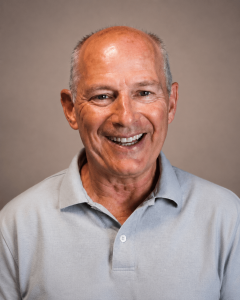
For nearly a decade, Ben Sautter carried a story he didn’t fully understand. He was a respected superintendent for the City of Helena, a devoted father, and a man his colleagues trusted. He was also someone who, years earlier, had been convicted of drug trafficking and spent over a year in prison, a period he now describes without shame or remorse, feelings he says he simply didn’t have access to. “I never felt guilty about doing anything,” he told me. “I never had no shame, no remorse. I still don’t.”
Then, on a morning in 2017, Ben woke up with his left leg buzzing like an electrical current, from his hip to his toe. He dismissed it as sciatica, worked out to try to shake it off, and drove himself to a doctor’s appointment while slurring his words. By the time he reached his physician’s office, she recognized what was happening immediately: Ben was in the middle of a stroke.
What followed wasn’t just a physical recovery. It became the beginning of a profound psychological reckoning one that reshaped how Ben understood himself, his marriage, and the two very different versions of the man he’d been his entire adult life.
What Personality Changes After Stroke Can Actually Look Like
When people talk about the effects of stroke, the conversation usually centers on physical deficits: weakness, speech difficulty, mobility. Less discussed but just as real for many survivors are the personality changes after stroke that surface in the weeks, months, and even years that follow.
For Ben, this didn’t show up as a dramatic before-and-after moment. It took roughly six months before he began to notice his own cognitive shifts, and years more before he could name what he was experiencing. “I feel like two different people,” he eventually admitted to himself, a recognition that came into sharp focus only after his wife, Helen, described what she called his “Jekyll and Hyde” pattern: a caring, grounded version of himself, and a sharper, more reactive one that could surface without warning, particularly under emotional pressure.
Ben also discovered something else in the process something many survivors don’t expect. Before his stroke, he says he operated almost entirely on three emotions: happy, sad, and angry. It wasn’t until his wife introduced him to a “feelings wheel” years after his stroke that he realized how narrow his emotional range had actually been. That flattened emotional landscape, paired with a striking absence of guilt or fear around risky behavior earlier in his life, points to something researchers increasingly recognize: strokes can affect not just movement and speech, but emotional regulation, impulse control, and self-awareness, particularly when the affected regions touch circuitry involved in processing feeling and consequence.
The Unexpected Overlap With PTSD
One of the more striking parts of Ben’s story is how he came to understand his own symptoms. Watching a 60 Minutes segment on a military veteran with PTSD, Ben recognized his own thoughts, words, and behaviors reflected back at him patterns his psychologist at the VA had already been treating with PTSD-informed techniques, without Ben fully grasping why. “That’s when I realized my family suffered the stroke as much as I did,” he said.
This overlap isn’t unusual. Post-stroke psychological symptoms hypervigilance, emotional reactivity, difficulty processing what happened can closely resemble trauma responses, even in survivors who never experienced combat or acute crisis in the traditional sense. Recognizing this early, and getting connected with the right kind of psychological support, can make a meaningful difference in how survivors and their families move through recovery.
Turning Reflection Into Change
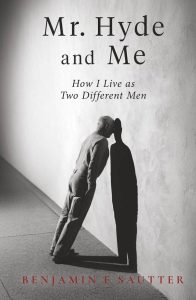
What makes Ben’s story remarkable isn’t just that he noticed these changes; it’s what he did with them. Nearly ten years after his stroke, and after years of separation from his wife, Ben sat down and wrote his memoir, Mr. Hyde and Me, in just ten weeks. “I called this therapy on steroids,” he said. “Writing this book was incredibly therapeutic.” The process gave him a framework to finally understand the dual nature he’d lived with since childhood, shaped, he believes, by an upbringing where feelings were dismissed, and risk-taking was treated as fun rather than dangerous.
“That guy that I was, that guy’s gone. I am not going to be that guy ever again.” — Ben Sautter
Today, Ben and Helen are reconciled. He describes himself as calmer, more deliberate, and a better listener than he was before his stroke, not despite the personality changes it triggered, but in some ways because of the self-awareness they eventually forced him to confront. As he put it plainly: “We would not be having this conversation if I hadn’t had a stroke.”
If You’re Noticing Changes in Yourself or a Loved One
If you or someone you love has experienced personality changes after stroke emotional flatness, increased irritability, impulsivity, or a sense of feeling like “two different people” you’re not imagining it, and you’re not alone. These changes are a recognized part of many stroke recoveries, and they respond well to the right combination of professional support, honest communication with family, and time.
Ben’s full story, including his path through incarceration, his stroke, and the years-long process of understanding his own mind, is available in The Unexpected Way That A Stroke Became The Best Thing That Happened, where survivors share the tools that helped them navigate recovery, available at recoveryafterstroke.com/book.
If this show has helped you, you can support it at patreon.com/recoveryafterstroke.
This blog is for informational purposes only and does not constitute medical advice. Please consult your doctor before making any changes to your health or recovery plan.
Jekyll, Hyde, and the Stroke That Changed Everything: Ben Sautter’s Story (Interview)
Bill’s Book: The Unexpected Way That a Stroke Became the Best Thing That Happened
Support Bill on: Patreon
Bill’s one-on-one coaching program: Momentum
Highlights:
00:00 Introduction – Personality Changes After Stroke
03:51 Realizing Something Was Wrong
12:51 Discovering His Dual Personality
21:05 Living With Only Three Emotions
31:50 Where the Pattern Began
39:55 Writing the Memoir That Helped Him Understand Himself
50:37 Stroke as a Catalyst for Change