
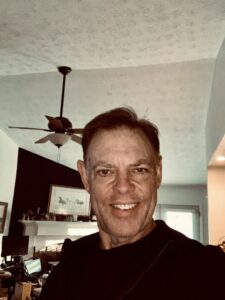
Life 3 Years After Stroke: Three years ago, Pete Rumple was in a hospital bed, weighing 337 pounds, unable to walk, unable to talk, and completely paralysed down his right side following a massive hemorrhagic stroke. He was on 17 medications and had just spent his first night as a wheelchair user. By his own admission, the first year was so dark that he didn’t want to live.
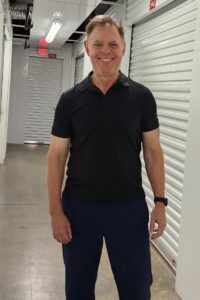
Today, Pete does CrossFit every day, has lost 150 pounds, is off 15 of his 17 medications, and is about to launch a new business at 61 years old.
This is what life 3 years after a stroke can look like and, more importantly, how Pete got there.
The First Decision: Control What You Can
Within days of his stroke, while still in the hospital, Pete made a choice. He couldn’t walk. He couldn’t use his right arm. Doctors were managing everything around him. But he could control one thing: what he ate.
“I got to change everything,” he says. “And as I lay there, this was one thing I could control with all the things I couldn’t.”
Pete reduced his intake to two or three bites of food per day. By the time he left the hospital 30 days later, he had lost 40 pounds. That single decision became the foundation of everything that followed.
For anyone newly out of the hospital and feeling overwhelmed, this is perhaps the most important message: you don’t have to fix everything at once. Find one controllable. Start there.
Books like Grain Brain by Dr David Perlmutter and Why We Get Sick by Benjamin Bikman are excellent starting points for understanding the role of nutrition in brain recovery; both are recommended in this episode.
Movement: From Water to CrossFit
Pete’s physical recovery moved in deliberate stages. With right-side proprioception severely affected, his body couldn’t properly sense where it was in space land-based exercise felt impossible at first. The solution was water.
“The water surrounds you,” Pete explains. “It’s easier to move with what we both have.”
He spent nearly a year in the pool doing aquatic therapy, then transitioned to a gym with a personal trainer for four months, then, in April 2024, ditched his cane and started CrossFit. He now attends every day, with about 30% modification.
The journey from wheelchair to CrossFit wasn’t fast, and it wasn’t linear. But it was intentional.
The Brain Science Behind Doing Hard Things
One of the most fascinating parts of Pete’s recovery is how he used neuroscience to drive his progress. After watching a Huberman Lab episode featuring David Goggins, he learned about the anterior mid-cingulate cortex (AMCC), a region of the brain that grows and strengthens specifically when you do things that are difficult and unpleasant.
“Everything I did not enjoy or created pain, I’m doing it.”
This wasn’t masochism. It was a strategy. Pete began deliberately choosing the exercises, behaviours, and tasks he least wanted to do and watched his recovery accelerate as a result. His speech improved. His movement improved. His cognitive function came back faster.
Bill adds important context here: when you visualise movement, your brain fires the same neural pathways as when you physically perform it. Pete used this daily, studying his CrossFit workout the night before, visualising each exercise, then arriving 30 minutes early to breathe and mentally rehearse before training.
This is neuroplasticity working for you, not against you. The choice is yours: choose the hard that rewards you, or endure the hard that doesn’t.
Identity: Three Words That Changed Everything
Beyond the physical, Pete’s recovery demanded a complete rebuild of who he was. An executive career was gone. Independence had been stripped away. The personality and habits that contributed to the stroke, such as overworking, overeating, and using alcohol to manage stress, needed to be replaced, not just removed.
He approached this the way he’d approached business: with a framework.
At any given time, Pete identifies three words that define who he is. Right now: resilient, consistent, and unafraid.
“I try to be honest with myself and say, where am I now?” he explains. “And it may change, but it gives me something to triangulate toward.”
This kind of identity-based self-management, knowing who you are deciding to be, not just what you are trying to do, is one of the most transferable lessons from Pete’s story.
What Life 3 Years After Stroke Really Looks Like
Pete’s neurologist, who once saw him quarterly, recently told him she doesn’t need to see him annually anymore. “We have not seen this kind of recovery before from what you had,” she said.
He’s about to start a fractional leadership business with a former CFO. He does CrossFit every day. He sleeps well. He volunteers. He uses AI tools to stay sharp and curious. He is, as he puts it, “on the other side of it.”
But he’s also clear-eyed about what’s ahead: returning to high-stakes work, managing the stressors that contributed to his stroke in the first place, and monitoring the potholes that come with re-entering a demanding professional world.
“I realise that is a very real risk,” he says. “I’m going to test and learn.”
The Lily Pad Principle
When asked how to frame the journey for people still in the early stages, Pete offers one of the most useful images in this entire conversation:
“It’s like lily pads across the lake. Get to a lily pad, then get to the next one. Don’t worry about boiling the ocean. Don’t worry about what it’s going to be in months or a year. Step by step. Keep pushing.”
That is life 3 years after stroke, not a finish line, but a direction. And for Pete Rumple, the direction is forward.
Want more stories like this? Read Bill’s book recoveryafterstroke.com/book | ❤️ Support the show: patreon.com/recoveryafterstroke
| ⚠️ Disclaimer
This blog is for informational purposes only and does not constitute medical advice. Please consult your doctor before making any changes to your health or recovery plan. |
From Wheelchair to CrossFit: Life 3 Years After a Massive Hemorrhagic Stroke
Pete Rumple lost 150 lbs, ditched the wheelchair, and now does CrossFit at 61. Here’s what life 3 years after a stroke really looks like.
Turnto.ai Interview
Peter Rumple Interview EP 332
Turnto.ai discount code: Bill10
Highlights:
00:00 Introduction to Life 3 Years After Stroke Recovery Journey
05:31 Physical Recovery and Rehabilitation
11:05 Dietary Changes and Weight Loss
15:42 Medication Management and Health Improvements
21:29 The Role of Visualisation in Recovery
26:03 Embracing Discomfort for Growth
33:31 The Power of Hard Work and Persistence
40:53 The Journey Back to Work
50:48 Navigating Health Challenges
56:25 Resilience and Consistency in Recovery
01:04:38 Proactive Health Management
01:15:11 Defining Identity Through Resilience