Personality Changes After Stroke: How Ben Sautter Discovered His “Hyde” and Became a Better Man
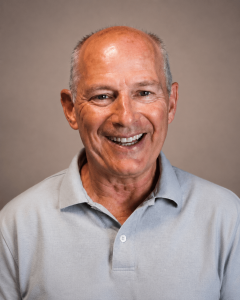
 For nearly a decade, Ben Sautter carried a story he didn’t fully understand. He was a respected superintendent for the City of Helena, a devoted father, and a man his colleagues trusted. He was also someone who, years earlier, had been convicted of drug trafficking and spent over a year in prison, a period he now describes without shame or remorse, feelings he says he simply didn’t have access to. “I never felt guilty about doing anything,” he told me. “I never had no shame, no remorse. I still don’t.”
Then, on a morning in 2017, Ben woke up with his left leg buzzing like an electrical current, from his hip to his toe. He dismissed it as sciatica, worked out to try to shake it off, and drove himself to a doctor’s appointment while slurring his words. By the time he reached his physician’s office, she recognized what was happening immediately: Ben was in the middle of a stroke.
What followed wasn’t just a physical recovery. It became the beginning of a profound psychological reckoning one that reshaped how Ben understood himself, his marriage, and the two very different versions of the man he’d been his entire adult life.
What Personality Changes After Stroke Can Actually Look Like
When people talk about the effects of stroke, the conversation usually centers on physical deficits: weakness, speech difficulty, mobility. Less discussed but just as real for many survivors are the personality changes after stroke that surface in the weeks, months, and even years that follow.
For Ben, this didn’t show up as a dramatic before-and-after moment. It took roughly six months before he began to notice his own cognitive shifts, and years more before he could name what he was experiencing. “I feel like two different people,” he eventually admitted to himself, a recognition that came into sharp focus only after his wife, Helen, described what she called his “Jekyll and Hyde” pattern: a caring, grounded version of himself, and a sharper, more reactive one that could surface without warning, particularly under emotional pressure.
Ben also discovered something else in the process something many survivors don’t expect. Before his stroke, he says he operated almost entirely on three emotions: happy, sad, and angry. It wasn’t until his wife introduced him to a “feelings wheel” years after his stroke that he realized how narrow his emotional range had actually been. That flattened emotional landscape, paired with a striking absence of guilt or fear around risky behavior earlier in his life, points to something researchers increasingly recognize: strokes can affect not just movement and speech, but emotional regulation, impulse control, and self-awareness, particularly when the affected regions touch circuitry involved in processing feeling and consequence.
The Unexpected Overlap With PTSD
One of the more striking parts of Ben’s story is how he came to understand his own symptoms. Watching a 60 Minutes segment on a military veteran with PTSD, Ben recognized his own thoughts, words, and behaviors reflected back at him patterns his psychologist at the VA had already been treating with PTSD-informed techniques, without Ben fully grasping why. “That’s when I realized my family suffered the stroke as much as I did,” he said.
This overlap isn’t unusual. Post-stroke psychological symptoms hypervigilance, emotional reactivity, difficulty processing what happened can closely resemble trauma responses, even in survivors who never experienced combat or acute crisis in the traditional sense. Recognizing this early, and getting connected with the right kind of psychological support, can make a meaningful difference in how survivors and their families move through recovery.
Turning Reflection Into Change

What makes Ben’s story remarkable isn’t just that he noticed these changes; it’s what he did with them. Nearly ten years after his stroke, and after years of separation from his wife, Ben sat down and wrote his memoir, Mr. Hyde and Me, in just ten weeks. “I called this therapy on steroids,” he said. “Writing this book was incredibly therapeutic.” The process gave him a framework to finally understand the dual nature he’d lived with since childhood, shaped, he believes, by an upbringing where feelings were dismissed, and risk-taking was treated as fun rather than dangerous.
“That guy that I was, that guy’s gone. I am not going to be that guy ever again.” — Ben Sautter
Today, Ben and Helen are reconciled. He describes himself as calmer, more deliberate, and a better listener than he was before his stroke, not despite the personality changes it triggered, but in some ways because of the self-awareness they eventually forced him to confront. As he put it plainly: “We would not be having this conversation if I hadn’t had a stroke.”
If You’re Noticing Changes in Yourself or a Loved One
If you or someone you love has experienced personality changes after stroke emotional flatness, increased irritability, impulsivity, or a sense of feeling like “two different people” you’re not imagining it, and you’re not alone. These changes are a recognized part of many stroke recoveries, and they respond well to the right combination of professional support, honest communication with family, and time.
Ben’s full story, including his path through incarceration, his stroke, and the years-long process of understanding his own mind, is available in The Unexpected Way That A Stroke Became The Best Thing That Happened, where survivors share the tools that helped them navigate recovery, available at recoveryafterstroke.com/book.
If this show has helped you, you can support it at patreon.com/recoveryafterstroke.
This blog is for informational purposes only and does not constitute medical advice. Please consult your doctor before making any changes to your health or recovery plan.
Jekyll, Hyde, and the Stroke That Changed Everything: Ben Sautter’s Story (Interview)
Bill’s Book: The Unexpected Way That a Stroke Became the Best Thing That Happened
Support Bill on: Patreon
Bill’s one-on-one coaching program: Momentum
Highlights:
00:00 Introduction – Personality Changes After Stroke
03:51 Realizing Something Was Wrong
12:51 Discovering His Dual Personality
21:05 Living With Only Three Emotions
31:50 Where the Pattern Began
39:55 Writing the Memoir That Helped Him Understand Himself
50:37 Stroke as a Catalyst for Change
Transcript:
Introduction – Personality Changes After Stroke
Bill Gasiamis (00:00)
Welcome back to Recovery After Stroke. I’m Bill Gassiamas, and today’s guest is Ben Sautter, a stroke survivor from Montana who in 2017 suffered an ischemic stroke caused by a carotid artery blockage. Ben was in his mid-50s working as a superintendent for the city of Helena when he woke up one morning with his leg buzzing like it was electric and his speech starting to slur.
But this episode isn’t really about the stroke itself. It’s about what the stroke uncovered. Ben spent decades living what he now calls a Jekyll and Hyde existence, including a period of incarceration for drug trafficking that he says he felt no guilt over at the time. And after his stroke, that started to change. We talk about emotional flatness, PTSD like symptoms he didn’t recognize until years later.
The marriage he nearly lost and the memoir he wrote in just ten weeks that finally helped him understand himself.
Before we get into it, if you haven’t already, check out my book, The Unexpected Way That a Stroke Became the Best Thing That Happened, over at recoveryafterstroke.com/book. And if this show has helped you, you can support it at Patreon.com/recoveryafterstroke, and you can help me keep it going so that we can get to one thousand episodes.
If you’re feeling stuck in your recovery and want more structure and one-on-one support, I also offer a coaching program called Momentum. You can find out more at recoveryafterstroke.com/momentum. Now let’s get into it. Here’s my conversation with Ben.
Bill Gasiamis (01:42)
Benjamin Sautter welcome to the podcast.
Ben Sautter (01:45)
Thanks much for having me.
Bill Gasiamis (01:49)
Can you tell me a little bit about what life was like before twenty seventeen and the stroke?
Ben Sautter (01:55)
Well, I was on it back then before the stroke. I was had a job that I really enjoyed. I was working for the city of Helena as a superintendent of streets and traffic division. And life was going really good for me there. And then it kind of came to a an abrupt halt.
Bill Gasiamis (02:15)
what was life like as far as what kind of work were you doing? What was family life like?
Ben Sautter (02:23)
Well, our family was pretty close at the time. We have two children and we were busy, we were really close, busy traveling. We had a motor home, we had lots of fun. we hunt and fish, a lot of outdoor activities here. We we have a little cabin that we spend all our weekends at. if we weren’t traveling, that is. so
Home life was pretty good. My wife and I were struggling a bit before I had my stroke. but we were a close family. And and work was good. I I I’d progressed up into mid-level management and I I had great great people, great staff underneath of me, and we got a lot of good work done for the city and had a lot of fun at work.
work was going good. Everything was going pretty good.
Bill Gasiamis (03:25)
Was there any sign that something was amiss with your health that perhaps there was something looming that wasn’t going to be fun?
Ben Sautter (03:36)
No, I was I was in great shape. I had had no signs of anything coming. so it was yeah, it was out of the blue. The stroke was out of the blue.
Realizing Something Was Wrong
Bill Gasiamis (03:51)
What was that day like? Was there any kind of deficit deficits that you experienced that gave you a hint that something was going wrong? Or how did it evolve?
Ben Sautter (04:00)
Well, I woke up in the morning to go to work, I knew something was funny and I couldn’t figure it out. I think when I woke up, I got I get up early and to get in before my first crew was in the mechanics were in at six. So I was in before that. But when I woke up my left leg was just buzzing like it was electric from my hip.
To my toe. And I didn’t comprehend. I was thinking it was like a sciatic something because I had a little sciatic pain from time to time in my right side, even though I knew this wasn’t the same, but I didn’t have the cognitive awareness of what was going on. And so I I worked out in the middle of it thinking maybe it was.
muscles in my back and if I exercise did go away and and it didn’t when I and I went on into work and my my mechanics were nervous. I I was starting to slur my words and and I I kind of felt it. I a I asked him I think if I was slurring my words
And they just kind of smiled at me. And I went back up to my office and then another one of my other supervisors came in and he sat down. He could tell something wasn’t right with me. And then he left and they were all getting together to come and check me out, and I left. I I had a a meeting, or not a meeting.
I had a doctor’s appointment out at the VA Fort Harrison at for 7 30 that morning. And so I was I was late and I think I d I think my doctor called me and I was on the road driving out there and she I told her kind of things were funny and what was going on.
And she said, Well, you need to get out here, get a ride out here. I said, Well, I’m driving. She said, God, no. I th she pretty well could tell she thought I was having a stroke right there. And I drove out there, I went upstairs to see her and they took me right down to the emergency right there.
Bill Gasiamis (06:39)
And
Did they immediately diagnose that you were having a stroke?
Ben Sautter (06:47)
We’re getting a little blurry on me right there. I
I I don’t really remember what they thought right at the time, right at that moment when I was in the emergency. I know a couple hours later they came to me and there was no doubt about it. They they knew then they had speech therapists in and a neurologist in the room and that’s so it took a couple hours to for a
sure diagnosis that I was in the middle of a stroke. Best I remember.
Bill Gasiamis (07:27)
Hm. It’s pretty common that
yeah, pretty common that you’re not gonna remember exactly what was happening at that time. Things were compromised. That makes complete sense. how long before well rather at some point you’re told that you had a stroke, how do you take that information?
Ben Sautter (07:48)
I don’t know that it it didn’t go over my head, but I I I wasn’t devastated. I and because I wasn’t I I was familiar with stroke, my father’d had strokes and he’d been paralyzed and lost his speech, so his were very severe. So at the time I I wasn’t feeling that I was that impacted by it.
I knew some things were going on, but looking back I can tell I just didn’t have the the awareness of what was happening to me, even though I knew it. but it it just didn’t feel serious to me.
Bill Gasiamis (08:34)
It didn’t sink in, perhaps.
Ben Sautter (08:36)
yeah, I w I would say so. Certainly not the gravity of it. and it actually it took quite some time. I’d say at least six months, really, before I started being aware of my cognitive deficiencies and and wondering.
asking myself questions even though within a week’s time I was at VA Salt Lake to have surgery on my carotid artery. So all that happened and I was still it’s not that I was in denial. Well, I didn’t think I was, but now looking back, I that could have been what it was.
But but I was aware. I knew it happened. Gosh, I had surgery. I I understood it all. I saw the MRI. I saw the mark on my brain. I had the surgeries I said. but I it it just the seriousness of it didn’t sink into me. Cause within
Bill Gasiamis (09:50)
Mm.
Ben Sautter (09:50)
two weeks, my doc cut me loose, my surgeon, I was up in the woods hunting.
Full tilt. They gave me they said, go ahead. So that kinda helped me believe that I the word what what I said, I dodged a bullet is how I put it. And even though I didn’t really dodge the bullet.
Bill Gasiamis (10:19)
so you said that you had about six months where you kind of had no real awareness or your cognition was impacted. What obviously your cognition was was impacted, but what other deficits did you have?
Ben Sautter (10:40)
I would just say the cognition, the physical part, I had that numbness in my leg. I didn’t even have a limp from it, but my whole leg f well, it’s still somewhat for for years was like I say, like it w my whole leg was stuck in a light socket, just buzzing like electric from my hip to my toe, and and that lasted a long, long time.
my leg got real heavy. I had to like I say, I could it didn’t show that I was limping or anything, but I had to work at that to not let it show. I had to make sure I high stepped kinda so my toe didn’t drag and I didn’t trip. I had to be very well aware of that to make it look like I was okay.
But but really physically it didn’t show.
Bill Gasiamis (11:43)
Your introductory email to me about joining me on the podcast was interesting.
what you had seems to be a catalyst for some change in your life. Like what occurred to you, the stroke, the hospitalization, the challenges that you had to come seems to be a catalyst for change in your life. Before the stroke in twenty seventeen, you said your wife and yourself were going through some difficult times.
but you were busy at work, you had a a whole bunch of other things going on. but there’s another side of you, there was another side of you at some stage that you were living a life that you were living that’s not quite the run of the mill standard lifestyle. Tell me a little bit about that. And was that lifestyle that you’re gonna to tell us a little bit about now? Was that something that you lived until your stroke?
Discovering His Dual Personality
Ben Sautter (12:36)
I’m living that still right now. that dual personality. And after the stroke, it was it might have taken a couple of years of me looking back. I was finally looking back, wondering who that guy was, that other guy. I I would say to myself.
I feel like two different people. And it wasn’t until after the stroke, I think, that I really asked that heart or asked that question, or said that to myself, that I feel like two different people. And that came from
questioning the things I did when I was younger. I was pretty wild guy and I did things that didn’t seem like me, yet I know I did all those things. Well hell I I got arrested, went to prison. So I know I was doing stuff that I shouldn’t have been doing. But back then it was
Pretty easy to do. And I it it wasn’t, it didn’t feel like me doing it. so after the stroke, I really started asking questions, trying to, trying to look back to understand. And I never got that understanding until I wrote that book last year. And then it all just poured out.
And I could see the dual personality and and and I still am that dual guy. My wife is able to recognize that more now, and when she s tells me about it, I can really see it when she explains it, especially what I say. I I say things
I say things that I don’t mean that aren’t me, that I don’t understand why I say those things. It’s and I named it Hyde. And it Hyde speaks different than I do, than Jekyll.
Bill Gasiamis (15:11)
How old were you when you ended up in prison and how old were you when you got out?
Ben Sautter (15:16)
I was thirty two when I got arrested and I was only out for like thirteen months so I was thirty thir about I was thirty four when I got out.
Bill Gasiamis (15:28)
And the stuff that you went in for, what kind of things were you doing that ended you up in prison?
Ben Sautter (15:38)
I was I got arrested for drug trafficking.
Bill Gasiamis (15:42)
And at the time was there a certain amount of disassociation from the behavior? And did you kind of find yourself doing things that you just weren’t, what was it, maybe like connected to logically? How how did you find yourself being in a situation that you now describe as this was not?
U or it was another U.S.
Ben Sautter (16:14)
That’s good question.
I have to say I don’t really understand yet where I was back then. It I I had to that it had to be that disassociation because I was a legitimate guy. I worked, I had jobs, I had good respect from people. I I was a legitimate man all day long every day. And I just slip out and
Did stuff.
I I d I had no feelings about it. I I wasn’t I never felt guilty about doing anything. I never had no shame, no remorse. I still don’t. I don’t feel those feelings. They just aren’t in me. Even after the book, after writing that and starting to understand that I don’t have those feelings, which I still don’t, but way back then.
I didn’t give a s I didn’t give a first thought to any of that illicit stuff I was doing. It was opportunity and I just went and did it. Didn’t give it a thought.
Bill Gasiamis (17:31)
Got it. And then when you ended up coming out of prison, did you go back onto the straight and narrow? Did you still double? How was life after that? Because it was thirty years almost, you know, between your incarceration and then your stroke. So I I’m just trying to set the scene just so I can ask you the next question later on about the stroke. So what was life like after the incarceration?
Ben Sautter (17:56)
So and I’ve been thinking about that a lot lately and writing about that. And that I had to make a very conscious decision. And and the way I put that, prison didn’t rehabilitate me. I had to make that decision that okay, I want to go back there. I need to I need to watch I need to watch over myself.
and keep myself out of trouble, which all those big crimes were the problem, but little things, I I went hunting, I was a poacher, I I trespassed, those types of things. I was very careful not to be caught speeding in a car or any of that, drinking and driving.
a little bit I’d find myself doing that and that was a difficult thing to overcome of to quit drinking and and so I was I’d find myself drunk behind the wheel and I I finally again made a conscious decision decision but it took a little time to work out of that to finally draw a line in the sand. In fact it wasn’t
until a year or two after I got married that I finally just quit drinking completely. And that was good. That was a good move. so it was w I can’t say that it was a struggle, but it was risky for me out of prison that I didn’t get caught at those littler, less severe law breaking.
Bill Gasiamis (19:53)
Yeah.
Ben Sautter (19:54)
Yeah.
Living With Only Three Emotions
Bill Gasiamis (19:55)
So what I’m hearing here is a you’re you’ve described yourself as Hyde. There’s a Jekyll somewhere here as well. and and also in your description of your behaviour and the way that you weren’t associated with it, or you have no feeling about something, or you know or you have no connection to what it meant when you were breaking the law.
It sounds a little bit sociopathic and it sounds like perhaps there was a some kind of a what people might describe as a psych as a psychiatric kind of challenge or issue there. Has that ever come up in a conversation with anybody?
Ben Sautter (20:41)
No, more the compartmentalization dissociation. I lived with and I didn’t know this until twenty twenty one or twenty two, I lived with three emotions, happy, sad, and angry. That’s and and I learned that when my wife brought out a feelings wheel. And she brought out this feelings wheel and sh she’s saying, tell me which
Where you land on some of these, and I thought, well, happy and sad and and angry. And that’s about as far as I went with it. And once in a while I’d feel a little something, but not really very much. So so that’s when I learned I was operating on three emotions. That’s all I ever had. So that really showed the compartmentalization and the disassociation right there.
psychopathic or psychopath has never come up even with my psychologist. she never identified that but I just saw her for the first time since I read wrote the book a few weeks ago and gave her a copy of the book and she was a little bit wide-eyed and surprised.
at the book and she’s reading it. So what kind of conversation we’re gonna have now will be really interesting to go back and see her. But but answer to your question, no, psychopath, no, just compartmentalizing
Bill Gasiamis (22:26)
Yeah, so sociopath, not psychopaths. Yeah.
Ben Sautter (22:28)
Sociopath, I’m sorry. I’m sorry. Yeah.
Bill Gasiamis (22:31)
Sociopaths tend to be people who in the moment can’t connect with the behavior, good, bad, indifferent, and then later on have the ability to kind of notice that the behaviour was inappropriate in some way, shape, or form, and kind of have well, maybe not regret, but kind of some understanding of
behavior being inappropriate. Whereas psychopaths are completely different, like they have no empathy, no nothing, right? There’s nothing there. So that’s a that’s kind of not where where where I was headed. I wasn’t asking
Ben Sautter (23:06)
Yeah.
Bill Gasiamis (23:07)
that. But it’s interesting that you describe these two separate, separate versions of yourself. it’s not uncommon to how I describe myself after the stroke, but I didn’t have a Jekyll and Hyde streak in me. But I had a line in the sand. The stroke seemed to
take my brain offline for a little while and it allowed me to connect with other parts of my body. Specifically, I talk about connecting with my heart and it made me more empathetic and more able to kind of access what what my values were rather than what my head thought was the right thing to do or what what my head thought was the right approach or the right way to go about things. So
it seems like the stroke has played some kind of a similar role in your ability to reflect on your past in a different way, th in a more associated way compared to what you had done before. Is that accurate?
Ben Sautter (24:07)
Absolutely. we talk about the stroke not being all bad for me because I’ve become far more aware. and that awareness is big, not just of my past and who I was, but being able to listen so much better and be more aware of what I say, think, and do. much more so.
So so yeah, the stroke has I the stroke has been good for me in in a lot of ways, cause causes some of those difficulties without a a doubt, but I think my wife would agree that I’m a better person, despite the change in moral compass after the
my incarceration, but I still was a Jekyll and Hyde, and I still am today. I she can see me come in and out of it much quicker than I have any idea. not necessarily on a daily basis, on an hourly basis and in conversation. She can see by what I say.
Bill Gasiamis (25:27)
what’s better about being able to listen more? you said that you you were able to hear more or pay attention better in a conversation, for example. Why is that better?
Ben Sautter (25:37)
The understanding, the understanding of the person I’m talking to, and the understanding of myself and and listening listening to hear rather than listening to respond. So though that’s really that’s big for me because I used to be so quick. I’d hear something, I could make decisions, I was very impulsive. I’ve I’ve really
rein that in to calm myself down and and just listen better, be slower, more deliberate, more purposeful. All all all of those things are much better for me. In fact, I didn’t have any of that before before the stroke. I was full tilt on everything. I I thought I did. I thought I was very considerate, concerned, and listened, but in comparison, no.
That wasn’t me.
Bill Gasiamis (26:37)
I it you said it’s better for you. Like why how is it better for you? How has it improved your life?
Ben Sautter (26:44)
I’m not banging heads so much. I I I let people have their thoughts, their opinions, and and I don’t take offense to to that. So everything’s calmer and and I I just don’t have the head banging I used to have.
Bill Gasiamis (27:04)
Why is it important for people to have their opinions and their thoughts?
Ben Sautter (27:08)
Well, I’m right and you’re wrong. Isn’t that what it’s all about? Everybody wants to be right and and think that that everybody should agree with them. That’s that’s how I see it now. It’s like, and if yeah, I’m right and you’re wrong. And I that I don’t do that anymore.
Bill Gasiamis (27:31)
Got it. Got it. This part of you that your wife still sees that you’ve kind of been able to rein in, like is it a sinister side of you that she sees? Is it the conniving side of you? Is it the the the one that’s possible to be led astray? Which side of it does she still see that kind of attends these conversations with your wife?
Ben Sautter (27:55)
I d I I’m not sure how you how you name this.
perfect example is if I I d slip up, do something wrong and Helen will bring my attention to it, I’ll say, Well, I just did that to see if you’re paying attention. So I I try to deflect things. I I have that I definitely the inferiority or or or and on myself. We’re all our own worst critic, of course, and and I I really feel
self conscious. I know my deficiencies and
I I go back and forth. I I know my deficiencies and I live with it. I’m okay with it. But sometimes if someone says something to me, Helen, one one time it’s okay and I get by it, one time it’s like it hits and it hurts. And and I I react, I try to deflect, I say things, hide comes out of me and and says things like to hurt back.
And and so I’m and she’s getting better about not letting me do that. And the sooner she says something now, if she says something right away, I go, yeah, sorry, I did say that. Whereas before I didn’t remember saying things and I would say that. She’d say, You she’d wait too long and then tell me you said something. Well, I wouldn’t say that, I don’t think those things.
That’s Jekyll saying, I I I don’t even think that. I I I didn’t say that. You took it wrong. Now I’m more believing that Hyde would say those things and and if she comes back quick enough and I can I’m right there. I’m like, yes, yeah, you’re right. And I I can apologize, but I’m getting better and better at not saying those things.
and and catching myself now, which is big, to to stop it before it happens. So I I as we talk through this, I am starting to be more aware of Hyde, what he says, what he thinks, and certainly what he does. I I conquered that long time ago. But what he says and what he thinks, I’m starting to catch that before I go wrong.
Bill Gasiamis (30:36)
You I’m gonna make a lot of assumptions now. You seem very unassuming as a sixty-three year old man who lived a dual life, you know, went to prison and all that. You know, you you wouldn’t pick that up from meeting you on a Zoom call or in person per se, right? and often often people who kind of live double lives, etc.,
There’s a an underlying cause, something that happened earlier on in life that caused them to take on a certain persona or to be a certain way or to get through a certain difficult time in their upbringing or the circumstances by which they found themselves in. Did you have a origin story? Was there something that you can think back at that perhaps that led you to take the on another persona in certain situations, or is it just how you’ve always been?
Where the Pattern Began
Ben Sautter (31:33)
The way it came out in writing my memoir, it was from when I was little, really little, and there was two things about it. We didn’t talk about feelings. Yeah, when you get hurt, you d you don’t you don’t cry about it, or you just don’t cry about it, you don’t feel anything. And my dad was a risk taker.
And he was so a lot of fun. He taught me some of my worst habits, if not most of them. And and I followed in his footsteps. Risk was inside exciting. Terror was exciting. Being scared was fun. That’s how my dad taught me. And you add that with no feeling, no fear. you just it was easy I said earlier.
It was really easy to go do those things shouldn’t do. It was fun and and there was money in it and calculated risks. no problem. It was just no problem.
Bill Gasiamis (32:46)
Your wife seems to have found something in you that was likable enough to kind of overlook that stuff or or to not see that stuff as being a real issue. Wha what do you think it is that she saw in you that kind of had her be okay with hanging out with a guy who had been incarcerated and perhaps had these tendencies to switch between these two personalities?
Ben Sautter (33:13)
Well, the incarceration I told her I thought I told her everything. I told
Bill Gasiamis (33:18)
Ha ha.
Ben Sautter (33:19)
her I told her enough for me to think I told her everything. And she felt that she saw me pay my dues and
She didn’t know a lot up until this last year. she didn’t see the dual side of me. Even though we struggled, she thought it was just me being me. Now it’s so much more clear. And and she’s the one that came up with the Jekyll and Hyde when I was halfway through the book. And stories were coming out she’d never heard before.
And that’s when one day she said, You’re like a Jekyll and Hyde. And that really changed the framework of my story. And and it showed me or helped me understand myself, the the dual personality. It still took a little bit to build it through the book to get a full understanding of it and draw a clear picture, but
By the time I was done with the book, it was easy to see the dual personality.
Bill Gasiamis (34:42)
Did your wife what did she like about you though? Like there was s she’s been around for a little while by the sound of it.
Ben Sautter (34:52)
Yeah, we’ve been together over thirty years. you’d have to ask her that. I I think well, I’m a fun guy. I I was caring and I I that Jekyll guy’s pretty decent fella. You know, I’ve I’ve successfully in business and I’m I’m a hard working guy. I I just that side of me,
Nice guy. I think there was a little intrigue probably from my past that I I was an exciting guy. I did a lot of things and and even though once we met, I was really trying to taper down and really trying to get a hold of myself and which I did and and w we did really, really well together for quite a few years and and then I think I wore
wore her down with that dual personality. Not think. I know I did. She finally it was too much for her and and and things kinda went south for us. We I I I can’t imagine even though I watched what I put her through, I don’t know how she lasted. she left for a lot of years after my stroke.
We split up for a lot of years and and I I’ve made some changes.
Bill Gasiamis (36:30)
So have you been able to reconcile?
Ben Sautter (36:33)
Yes, yes
Bill Gasiamis (36:34)
Okay.
Ben Sautter (36:35)
we have.
Bill Gasiamis (36:36)
Do you think anything that you and I have just discussed, anything of that would have been possible if you didn’t have this stroke?
Ben Sautter (36:47)
Well, I would say no. No. Not unless I’d a wrote the book and it happened like it did. But before the stroke, no, I d I I couldn’t get there. I wanted to, I tried. We we had a lot of conversations, but I just it was like a wall. I I just couldn’t see through it. I couldn’t get through it. I just couldn’t get there. So no, we would not be having this conversation if I hadn’t had a stroke.
Bill Gasiamis (37:16)
That’s fascinating to
me. That’s just fascinating to me that you’ve had this turnaround. And not not to say that turnarounds are complete as soon as the stroke happens or that things are easier or different or better or whatever. But like there seems to be a genuine willingness to discover what this newer version of yourself could be like and could emerge into an author, somebody who wrote book.
somebody who’s reconciled with your wife, somebody who’s admitted all these things that you’ve admitted and kind of made a concerted effort to not fall into those traps. Again, you’ve associated with things. And it’s all because of a stroke, because of a carotid artery blockage, or was it a dissection? What was it?
Ben Sautter (38:10)
It’s just a a blockage above the Y in a little piece of it. I got so lucky. It was a huge blockage and a little tiny piece flaked off, hit me
Bill Gasiamis (38:23)
Uh-huh.
Ben Sautter (38:23)
right up in this side, and that’s why they had to go in and remove that chunk of plaque. And
Bill Gasiamis (38:30)
Yeah.
Ben Sautter (38:31)
yeah.
Bill Gasiamis (38:33)
And it’s kind of it seems like it’s for you at least this experience has been really positive, other than the of course risk to your physical well being and your life, right? Seems a lot of positive has come out of it.
Ben Sautter (38:51)
I would have to agree with that. And and I know Helen would too. I’m I’m much different. I’m a much better person than I was. I so yes, the the stroke you know, I don’t think there’s many people can say that the stroke has done me more good than bad bad. The physical part of it has been a challenge, but I I push that every day and and I’m I’m working hard with that still.
But the cognitive part of it, yeah, I I’m a better I’m a better man now.
Bill Gasiamis (39:29)
Hmm. you’ve got a copy of the book in front of you, I believe.
Ben Sautter (39:33)
Yes.
Bill Gasiamis (39:34)
Show us the the book. Tell me a little bit about how you came to write it. Like what’s the what what why did you feel the need to write the book?
Writing the Memoir That Helped Him Understand Himself
Ben Sautter (39:50)
So I actually started the book in twenty sixteen before I had the stroke. And I it my intention was to write a bunch of stories about all the crazy things I did, crazy things that happened to me. Just a book of stories is what I was gonna write. And once I got serious about it last September, I sat down, got out what I had, and
And once I started I couldn’t stop writing. I wrote this book in ten weeks and it just poured out of me and it’s nothing like I ever would have thought I could write. it has good value. It has value for anyone that reads it.
Bill Gasiamis (40:40)
So it’s a 10 year project that took ten days to ten weeks or ten days to complete. Ten weeks to
Ben Sautter (40:46)
Ten weeks. Ten weeks.
Bill Gasiamis (40:48)
complete. So that’s really cool in that like the idea was already there, germinating. It it took a while. you had to overcome certain things. You had to probably move beyond, you know, certain parts of your your your transformation to get to the stage where the book was possible.
it sounds like you put in work with your family, with yourself. How long have you been seeing a counselor?
Ben Sautter (41:18)
Right after the stroke I started seeing my psychologist and and it’s interesting to me really early on she had me doing
work that was for PTSD. And she would give me lessons to bring home. And they were for the for the veterans that suffered from PTSD, which I never knew anything about it. It was kind of a phantom thing for me, because I didn’t know anything. And and I’ll be honest with you here, one night on 60 Minutes I was watching a veteran with his
wife and daughter being interviewed on sixty minutes and he had the PTSD and that family was talking about him doing the it saying, doing, thinking, the exact things I was doing with my family. And that really just hit me hard. No wonder I’m doing PTSD work because the stroke is the same thing i i in a sense.
And that’s where I learned so much watching that segment that night. I learned about myself, my family. And that’s when I realized that’s when I realized my family suffered the stroke as much as I did. That came to me.
Bill Gasiamis (42:51)
What’s interesting is I asked you about things that might have happened in your past that may have been foundational kind of things that were responsible for these two personalities of you. You mentioned your dad, your upbringing, some of the stuff that he would get up to and how you were kind of influenced by him. But y I just heard now that you’re a veteran. So did you actually attend did you serve as a veteran?
Ben Sautter (43:19)
I did. I did a couple of years in the Navy in right when the Vietnam War was getting was ending. In fact I was in in April of seventy-five is when it ended. And I never went overseas. I was shore duty in California. I was at NAS Alameda and and that’s a pretty big piece in my book of of my time in the Navy, which is quite a story.
but I I didn’t suffer any any I didn’t go to I didn’t go to war. I did not go to war. I I
Bill Gasiamis (43:55)
Or no battle no battles or
anything like that. And and do you think the PTSD was from something else, perhaps?
Ben Sautter (44:04)
I think it w just from the stroke. Just from the stroke and I didn’t know it. that’s
what I got from that sixty minutes segment is is the cognitive things that I was saying that and didn’t understand what the stroke did to me. I thought I was fine. I went to work back to work a couple months after I had the stroke. I worked for a couple months and I realized
I I wasn’t cutting it.
Bill Gasiamis (44:36)
Whose idea was it to go to counselling after the stroke?
Ben Sautter (44:46)
I don’t know that I don’t remember, but I would say they probably just assigned me to a psychologist to to to see where I’m at, help me through it. VA Ford Harrison is phenomenal, those people. great staff there. So they just were taking care of me, I think. I don’t remember it.
Bill Gasiamis (45:06)
Yeah, might have just been
standard part of the approach to helping somebody who’s a VA.
Ben Sautter (45:14)
That would be my my my guess that it was just part of their program.
Bill Gasiamis (45:20)
And it sounds like you were pretty willing or or were you resistant at the beginning. Do you recall how you felt about being in counseling?
Ben Sautter (45:29)
Yeah, I I was fine to go there and really really like this psychologist I see and and the other ones. I’ve seen numerous psychologists there and yeah, they I always feel better coming out of there than I do when I walk in. So no doubt.
Bill Gasiamis (45:51)
Have you expanded on your happy, sad, angry emotions?
Ben Sautter (45:55)
I’m I’m pretty even now. I don’t get too wild. When I first had the stroke I was very emotional. I was tears in my eyes over almost nothing. it was quite a struggle for
Bill Gasiamis (46:13)
That’s common.
Ben Sautter (46:14)
s some years. And and now I I I’ve I’m very well in control of my emotions and to the point that I’m
I might be a fairly boring guy. I like to have fun. I laugh a lot. I’m not the wild guy that I was, but so so I I don’t have much anger. I don’t have much sadness. My anger y my sadness used to turn to anger. So I really had happy and angry is really what I had. I I don’t go there anymore. Life is too good for me now. I don’t
I don’t have sadness or anger.
Bill Gasiamis (46:55)
every so often you say a couple of things and it triggers me to ask you the next question again. And it’s kind of my job to probe. And this is not a counseling session, but it’s very fascinating. Was there perhaps some kind of a personality disorder there, like a like a bipolar or something like that? Because you’re describing like happy, angry, or do you know there’s no in between and it’s very bipolar ish. Whereas I know it’s not bipolar.
Because in Bipala they’re described as being happy and really, really kind of deep, sad extremes. But you seem to occupy a similar kind of space does that ring a bell? Did anyone ever bring that up, perhaps?
Ben Sautter (47:38)
No, I’m I’m I’m d just too happy all the time, always not in the good mood that I always used to be, but I lived pretty happy life. I I just didn’t let the rest get me. But when I went off in the weeds, I my anger was would get away from me.
Bill Gasiamis (48:01)
That’s a great way to describe it because that’s tend tends to be how anger is. Like it just kind of builds up and builds up and then it gets away. And if you do that often enough, it becomes really easy to get to anger. And what people don’t realise is that anger is also and complaining and all those types of things also releases dopamine in the brain. There is a reward that people get for misbehaving
Ben Sautter (48:26)
Mm.
Bill Gasiamis (48:26)
and expressing anger. Otherwise you wouldn’t do it.
There is the there is also the I I’m trying to achieve something or get something done or I’m trying to intimidate some someone or I’m trying to you know get a child to take action somewhere where they frustrated me or whatever. So there there is a a a th this underlying purpose for anger, but also it’s a rewarding to the brain when you act out in an angry way.
Ben Sautter (48:58)
I think that’s a really good point. When I was younger, I would break I would look to break something. I would get so mad I just I would break something and then I felt good about it. Okay, I got that broke. Now I’m now I can be happy again. So just exactly what you just said. Interesting. Hmm.
Bill Gasiamis (49:19)
Yeah. That is interesting. It’s interesting and fascinating.
Stroke as a Catalyst for Change
This has been one of the most interesting conversations I’ve had because we’ve barely spoken about the stroke and how you experienced it and what it did to you. But it seems like we’ve spoken about it enough in that it was a catalyst to something new, something different. And often my attempt has always been in these interviews is to tell people about the fact
You know, we share a story of what life was like before stroke for people. And then we sure share the story of like what happened during the stroke time and then what happened after. And if you’re currently in the stroke moment, it’s really, really hard. You you don’t know where things are headed. There’s a lot of uncertainty, a lot of change, a lot of experiences that you never saw coming, you know, things that are happening. You might be experiencing your body differently, your cognition differently.
your hearing, your speech, it all might be different and it’s extremely full on in that moment. And the idea is, well, let’s continue with the conversation and try and move and and paint a picture of what life might be like for somebody, even though they’re going through a really hard time five, six, seven, ten years down the track, you know? And you’re in the 10 year mark and it’s taken you 10 years to get here, write a book, reflect on your past the way that you’ve been reflecting.
mend your relationships, become more aware of your behavior, the one that served you, the one that didn’t. And it’s not really a story about stroke, but it’s stroke seems to have been the catalyst for an opportunity for you to look at things a different way and for it to break certain patterns that were embedded that
now have been able to be in kind of like fizzled. You know, the edges of them were fizzled away so that something could enter and you know, like throw a spanner in the works and change the way the cogs moved. and it’s just fascinating that stroke can do that.
if we didn’t talk about that part of stroke, that good part of stroke, people might only see stroke as only ever being a terrible thing that happened to them, which I also understand if somebody feels that way, because there’s a big spectrum of how people are impacted by stroke. So I don’t wanna take that away from people who are suffering.
but you you know, like the shift and the change that you’ve had
through a stroke is just night and day, it’s phenomenal.
Ben Sautter (52:07)
One of the bigger things I think I’ve learned that goes with that is
It’s been a few years ago I learned that that guy that I was, that guy’s gone. And I am not gonna be that guy ever again. So I I’m looking at at the guy that I am, who I believe is a better guy than I was anyway. So that’s been a good thing. And I think that comes from my wife and from my psychologist at the VA that it it’s
There’s no more who I was, it’s who I am. And and that’s come a long ways because of that, I
Bill Gasiamis (52:51)
Yeah.
Ben Sautter (52:51)
believe.
Bill Gasiamis (52:52)
And who you’re becoming by the sound of things.
Ben Sautter (52:55)
That too. Yes. Yeah, because I I do that’s a really good point. I do know I will get better. I will be better as time goes on. But you gotta keep you gotta keep working at it.
Bill Gasiamis (53:10)
Yeah. Being better and getting better, does that mean that the f the the way the leg feels is different or can the the the way the leg feels not necessarily go back to normal and you still are getting better, you still are improving, even though your leg perhaps stays
Ben Sautter (53:29)
Lake skiing. my pain is way, way, way down to where I don’t my pain is nil. I can go well, I I do a lot of needles, I do a lot of injections, I do a lot for it, but those are getting less. so th I’m hurting less, I’m hiking better, I ride my bike a lot, all those things.
are I’m gaining the numbness, the tingle’s gone. That electricity thing like your fingers in a socket, that’s all gone. The s hard stiffness is down in my lower leg and my foot, so my leg’s better. yeah physically I’m getting better, better better.
Bill Gasiamis (54:22)
Yeah. Where can people go and find the book?
Ben Sautter (54:27)
Amazon. Amazon. Mr. Hyde and Me. The name of the book. Yeah, I’m
Bill Gasiamis (54:32)
Yeah. The links will Yeah.
Ben Sautter (54:35)
this is me. This picture is me on
Bill Gasiamis (54:38)
Yeah.
Ben Sautter (54:39)
the corner, on the corner of Wilson and Main Street in downtown Bozeman. Bozeman, Montana. So took a took a lot of thought to get to make that picture and to get that shadow just right.
So my shadow guy facing into him head on. And been a lot of been a lot of reward doing this. This I called this therapy on steroids. writing this book was incredibly therapeutic.
Bill Gasiamis (55:14)
Yeah. I can imagine. Ben, thank you so much for reaching out. Really appreciate your conversation and your honesty and I really wish you well with your recovery ongoing.
Ben Sautter (55:26)
And thank you. This is one of the better conversations I’ve had about my my situation ever. So Bill, I can’t thank you enough. I appreciate it and I’ll look forward to this all turns out.
Bill Gasiamis (55:40)
Well, that’s it for another episode of the Recovery After Stroke podcast. If there’s one thing to take from this episode, it’s Ben’s line. That guy that I was, that guy’s gone. I’m not going to be that guy ever again. A stroke took something from Ben, but it also gave him a level of self-awareness and emotional range he says he never had access to before. And it helped him rebuild a marriage he thought he’d lost for good. If you want the full story, Ben’s memoir.
Mr. Hyde and me is available on Amazon. You’ll find links in the bio. And if this episode resonated with you, share it with someone who might need to hear it. And if you’re looking for more tools for your own recovery, check out my book, The Unexpected Way That a Stroke Became the Best Thing That Happened. It’s available at recoveryafterstroke.com/book.
If this show has helped you or someone you love get through their journey with stroke, you can support the show to help keep it going on patreon.com/recoveryafterstroke. And if you want to work with me directly, my coaching program Momentum offers one-on-one support and accountability for stroke survivors who feel stuck. More at recoveryafterstroke.com/momentum. Thanks for listening and I’ll see you in the next episode.