Stroke With No Warning Signs: What Tom Ballo Wants Every Survivor to Know
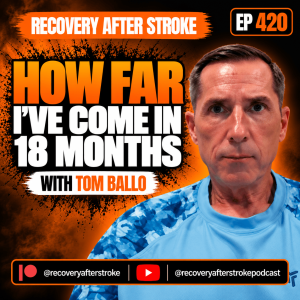
Tom Ballo was 65 years old, nine years into a retirement he’d earned across three decades as a telecoms litigator, when a massive hemorrhagic stroke put him on the floor of his own home. There was no dizziness the week before, no slurred word he brushed off, no doctor’s visit he postponed. “It just hit me out of the blue,” he says. “There were no warning signs or anything. No. Very sudden.” His five-year-old granddaughter was the one who found him, ran to get her father, and called 911.
That single fact- a stroke with no warning signs is the hardest one for a survivor’s family to sit with, and it’s the reason Tom’s story matters. We’re trained to look for a prodrome: the TIA that precedes the “real” event, the slurred speech, the drooping face, the classic FAST checklist. Those signs save lives when they’re present. But a meaningful share of hemorrhagic strokes, including Tom’s, give no such courtesy. Understanding this isn’t about inducing fear; it’s about removing the false comfort of “I’d definitely see it coming,” which quietly stops people from taking risk factors seriously simply because they feel fine right now.
Eighteen Months Later: “I Had Like One Bad Day”
What makes Tom an unusual guest isn’t just the suddenness of his stroke — it’s what he says about the recovery. Eighteen months out, he offers a claim that stops most interviewers in their tracks: “Ever since I had the stroke, as far as bad days, I had like one. One bad day, I guess.” For a show built around the long, uneven work of recovery, that’s either the most useful sentence a newly diagnosed survivor will hear all year, or the most worth interrogating. We chose not to resolve that tension neatly, because Tom doesn’t either — and that honesty is more useful to you than a tidy takeaway would be.
“Ever since I had the stroke, as far as bad days, I had like one. One bad day, I guess.” — Tom Ballo
Part of what underwrites his outlook is a framework he leaned on well before the stroke: self-actualisation, drawn from Abraham Maslow’s 1943 hierarchy of needs. Tom describes himself as someone who had already done the internal work of knowing who he was — a foundation he credits with much of his composure now. It’s worth a caveat here for accuracy: Maslow’s hierarchy is a theory of motivation, not a diagnostic instrument, and there’s no validated test that certifies someone “self-actualised.” What Tom is really describing is a stable sense of identity going into the hardest thing that ever happened to him — and that’s a legitimate, replicable idea, whether or not you use Maslow’s language for it.
The Part That Doesn’t Get Easier
“One bad day” is not the same as “no hard days,” and the interview doesn’t pretend otherwise. Tom is candid that spasticity the stiffness and involuntary muscle tightness that often follows a hemorrhagic stroke is getting worse, not better, as he moves further from the event. This is a pattern a lot of survivors will recognise, and few outsiders expect: the assumption is that time only heals, when in practice some deficits plateau, some improve, and some, like spasticity, can progress. If you’re eighteen months, three years, five years out and still watching a symptom evolve, Tom’s experience is a useful, unglamorous data point that you are not doing recovery wrong.
There’s a quieter data point too, and it cuts the other way: Tom says he hasn’t had a bad night’s sleep since the day of the stroke. For an audience where post-stroke fatigue and insomnia are close to universal, that’s a genuine outlier worth naming precisely because it complicates any single story about what stroke recovery “typically” looks like.
What Changed at Home
The practical texture of Tom’s recovery runs through his family: the granddaughter who acted fast, the wife who stepped in to run the household during the hardest stretch, the shift from being the one who handled everything to being the one who’s learned, in his words, that “it’s kind of a blessing” to do less. He’s candid that he hasn’t driven since the stroke and says he doesn’t feel a pull to change that. There’s no performance of getting back to “normal” here — just an honest account of a life that reorganised itself around new limits, some of which he’s made peace with and some of which, like the spasticity, he’s still working out how to hold.
Why This Story Is Worth Sitting With
If you came to this looking for a checklist of warning signs, Tom’s story won’t give you one, and that’s the point. Some strokes, including major hemorrhagic ones, arrive without a warning a person could reasonably have caught. What you can control is what happens after: how quickly the people around you act (his granddaughter didn’t hesitate), how you rebuild a working identity in the aftermath, and how honestly you track what’s actually getting better versus what’s quietly getting harder. Tom’s “one bad day” isn’t a promise you’ll get the same outcome. It’s permission to notice what’s still working, even while something else spasticity, driving, the parts of independence you used to take for granted hasn’t resolved yet.
If Tom’s story raises questions about your own recovery, or a loved one’s, that’s exactly the conversation this show exists to have. You can go deeper into the ideas behind post-traumatic growth after stroke in Bill’s book, The Unexpected Way That A Stroke Became The Best Thing That Happened (recoveryafterstroke.com/book), and if this kind of interview is valuable to you, the show runs in part on listener support at patreon.com/recoveryafterstroke.
This blog is for informational purposes only and does not constitute medical advice. Please consult your doctor before making any changes to your health or recovery plan.
Stroke With No Warning Signs – Tom Ballo’s One Bad Day in Eighteen Months
He had zero warning signs before his stroke at 65. Eighteen months later, Tom Ballo says he’s had exactly one bad day.
Highlights:
00:00 Stroke with no warning signs
03:25 What kind of stroke was it
08:18 Learning to talk and walk again
11:42 Does he have aphasia?
17:46 One bad day in eighteen months
27:15 The symptom that’s getting worse
33:20 The one thing that hasn’t changed
Transcript:
Stroke with no warning signs
Tom Ballo (00:00)
it just hit me out of the blue. It hit me out of the blue. There were no warning signs or anything. No.
very sudden.
luckily, my youngest granddaughter was there. My young granddaughter, she was five years old.
She was there and I guess she saw me and she went and got her dad, who’s my son-in-law. They were living with us.
At the time we had a big house and he told him, she told him and he came down and called 911 right away.
Bill Gasiamis (00:39)
Welcome back to Recovery After Stroke. I’m Bill Garciamas, and today’s guest is a genuinely different kind of conversation for the show. Tom Ballo spent 32 years as a telecoms litigator, retired at 56 to actually enjoy it, and nine years later, at 65, a massive hemorrhagic stroke hit him with absolutely no warning. His five-year-old granddaughter is the one who found him and got help.
What you’re about to hear is a conversation that moves differently than most on this show. Tom takes his time, getting to his words, and there’s a real compassion and openness in the way he talks about what happened to him. No performance, no polish. Just the man being honest about where he’s landed 18 months on. Stay with the pace of it. That pace is part of what he’s telling you.
We’re going to get into what he calls one bad day in 18 months,
what’s actually gotten harder rather than easier, and what he’s learnt about who he already was before any of this happened. Remember to grab a copy of my book, The Unexpected Way That a Stroke Became the Best.
thing that happened at recoveryafterstroke.com/book It’s the 10 tools I used to build my own recovery. And a lot of what Tom describes today connects straight back to it. And guys, if this show has helped you, remember you can support the show directly at Patreon by going to patreon.com/recoveryafterstroke and making a small monthly contribution. It helps cover costs of recording, editing and hosting the podcast.
Bill Gasiamis (02:16)
Tom Ballo, welcome to the podcast.
Tom Ballo (02:18)
Thank you. Glad to be here.
Bill Gasiamis (02:19)
Tell me a little bit about what occupied your time before stroke.
Tom Ballo (02:24)
Well, I retired, retired 10 years ago. So I was well acclimated to that. And I mostly doing, I had a YouTube channel. It it’s called GTA5 and Squirrels. And I said,
make recordings of Grand Theft Auto V video game, really interesting videos. And then I got some squirrels that were living next to the house and one of them started was really…
friendly. He kept walking up to me and finally started climbing up me and I started feeding him and I was making videos of videos of that.
What kind of stroke was it
Tom Ballo (03:19)
I had over 1500 subscribers and 1 million views. And the whole channel just hit 1 million.
Bill Gasiamis (03:30)
And y you used to play GTA, Grand Theft Auto. Was it your favourite game?
So you’re doing that in your retirement before you retire retired, what were you doing for a living?
Tom Ballo (03:40)
I was a lawyer for a real, real large telephone company for 32 years.
I was a litigator and regulatory law, so it was administrative law, I was, it was just, it was cases, and they were the biggest cases that affected the company.
About nine years.
Bill Gasiamis (04:06)
Yeah.
Tom Ballo (04:07)
That was one reason I retired early. I retired at age 56 and I just wanted to make sure I had time to enjoy retirement. I didn’t want to work until I died or would have had the stroke when I was working. That’d be different. I had enough time to do a lot of things.
for the stroke happen.
Bill Gasiamis (04:35)
What what was that day like? What what did you notice?
Tom Ballo (04:39)
nothing, you know, it came out of nowhere. I was playing a video game and about seven o’clock at night and I got up and was getting ready to walk in, go into the other room. I was done and it just hit me out of the blue. It hit me out of the blue. There were no warning signs or anything. No.
very sudden.
Bill Gasiamis (05:07)
What kind of stroke was it? What what was the
Tom Ballo (05:09)
Is it hemorrhagic?
And it was, they say massive, it was a massive one. You know, I pretty much started trying to tip over to my right side. That was the side that started effecting. And I think I made it into the bathroom and over towards the sink. I mean, mean the tub.
And that’s the last I remember. luckily, my youngest granddaughter was there. My young granddaughter, she was five years old. She was there and I guess she saw me and she went and got her dad, who’s my son-in-law. They were living with us.
At the time we had a big house and he told him, she told him and he came down and called 911 right away.
It just hit like a ton of bricks.
Bill Gasiamis (06:19)
How did you experience it? Was it painful? Was it were you dizzy? What happened?
Tom Ballo (06:27)
I had about 60 seconds that I was aware of it. It just hit me and I don’t have any pain recollections from it, but…
Apparently I hit my head pretty hard, had bruises and all kinds of things.
Bill Gasiamis (06:47)
Do you have the details about how you ended up in hospital? You they called nine one one. You’re you’re in hospital. Do you have
Tom Ballo (06:54)
right, heat called.
Bill Gasiamis (06:55)
any recollection of that?
Tom Ballo (06:57)
Well, I don’t have any recollection of the ambulance coming or anything about the hospital for about, I don’t know, 10 days.
And even then, even my memory then is very, very generic. Like, you know, I knew I was in a hospital.
That kind of thing.
And then
Bill Gasiamis (07:20)
Yeah.
Tom Ballo (07:21)
I don’t have much of a memory of it. The interesting thing, my wife was in Germany. One time she’s gone to Germany or somewhere abroad.
marriage and just happened to be there. Luckily, granddaughter, know, had seen me in the bathroom.
Bill Gasiamis (07:47)
You woke up in hospital and you had some awareness of your deficits. Did you kind of notice that s certain parts of your body weren’t working the way they were prior?
Learning to talk and walk again
Tom Ballo (07:56)
Well, yeah, I mean, it, you know, I don’t know, it’d just be like a car wreck or something. I knew all kinds of things were wrong. my,
Half my body was numb, exactly right down the middle from the top of my head to the bottom of my toes, straight down the middle. You know, like over here, could feel everything, right at the halfway point, now it’s, this is all numb. The right side of me. So I knew that I couldn’t, you know, I had…
Obviously I had not paralysis, numbness on the whole right side of my body.
So I wasn’t able to do much, know, although they kept me in the hospital for six weeks. And, you know, therapy. was inpatient.
Bill Gasiamis (09:04)
Yeah, because your body was dumb, did that mean you couldn’t walk or use your arm?
Tom Ballo (09:08)
I couldn’t walk. They put me in wheelchair and it would take me down to a…
call it therapy. And there they would get me out of the chair at least and I did speech therapy, occupational therapy and physical therapy. Worked on my head, my arm. That was the occupational therapy and then physical therapy with the right leg.
So I couldn’t really talk that well in the very beginning.
eventually got it, pretty much.
Bill Gasiamis (09:46)
Is that cause your speech was slurred?
Tom Ballo (09:48)
Yeah, it was, it was slurred. was real soft and, which just wasn’t my normal voice. It still isn’t, still is not really my normal voice.
Bill Gasiamis (10:01)
And has it impacted your memory and the way that you recall things?
Tom Ballo (10:05)
has not affected me in that regard, in that manner.
I
was always, I was very, I still am, but very intelligent person. I don’t mean to sound odd with that, but I just have always been, you know.
I’ve always had a good, really good, you know, brain, so to speak.
Bill Gasiamis (10:34)
Yeah. So it hasn’t affected your capacity cognitively, but it’s affected other things. And your voice is not your original kind of sounding voice. You sound a little different. And your right arm is a out of action.
Tom Ballo (10:47)
No, I mean, this is my right hand here. You know, I can, I can live, but I don’t, I don’t use it for stuff like, you know, it’s kind of a hassle cause I’m right-handed, but to have a right hand apparently affected, you know, affected by the strokes. Bad luck essentially. You know what I mean?
Bill Gasiamis (11:15)
Yep.
Tom Ballo (11:16)
now I do a lot of things with my left hand
Bill Gasiamis (11:19)
Yeah. And what about your right leg? How are you up and about? Can you get around?
Does he have aphasia?
Tom Ballo (11:27)
I can walk for sure. Yeah, I don’t have any kind of walking assistant and I can pretty much.
I take care of everything. my wife once was gone for I think four days. And so I was able to take care of myself for four or five days straight by myself. So I’m able to get around. But walking, you know, I’ve fallen a couple of times. I know you’ve talked about that.
I have been following, I’d say now it’s been like three or four months. Probably the longest stretch ever. But I was always really good at tripping and catching myself. And people would say, man, I thought for sure you were going down. I was always able to…
catch my own balance, I still have that ability so but you know I have to be careful walking around close and there’s a lot of obstacles on the ground they’re close to me to be kind of careful if I’m walking around that.
Bill Gasiamis (12:48)
And what about driving, Tom? Are you driving?
Tom Ballo (12:52)
I haven’t driven yet. You know, I want to. I’ve talked about it. Just haven’t had to,
haven’t done it. You know, my wife is, she’s great. She does so many things that I haven’t, I haven’t, you know, I don’t really need to drive. Don’t have any need to.
Bill Gasiamis (13:12)
Yeah. So you have access
Tom Ballo (13:13)
Yeah, it’s just.
Bill Gasiamis (13:14)
to transportation even even though you’re not driving, you can still get around.
with regards to the speech challenges after the stroke, was there any aphasia or anything like that that also surfaced?
Tom Ballo (13:27)
I’ll finish ya. I’m gonna go to the set.
Bill Gasiamis (13:30)
that’s when you’re unable to get words out. You know what the words are, but then you can’t generate the the sound in your mouth.
Tom Ballo (13:37)
don’t know. Not really. I think I can get everything out. don’t… There’s no…
systematic problem that I’m aware of. know, finding… A lot of times won’t talk that much. I don’t have to. But if I do, I don’t have a problem saying things.
Bill Gasiamis (14:06)
Yeah. How long ago was a stroke now?
Tom Ballo (14:08)
That’s happened March 1st of last year. about a year and half.
happen.
Bill Gasiamis (14:18)
About a year and a half ago.
Tom Ballo (14:20)
Yeah, you know, it was interesting when I was in, I was in therapy in-house for six weeks. And so I was about the middle of April, had the stroke on March 1st of last year.
I was on with the hospital in middle of April, they sent me home. But, and then I, for the rest of the year, I came in two or three days a week for out, I guess, outpatient therapy.
People used to see me and I wouldn’t, it was pretty odd. A lot of people, I don’t know, I’d say at least 10 people over the time.
you know, seeing me and I didn’t know them, but they knew me somehow. And they all said, I’m doing a great job, you know, being able to, in their recovery. I guess they had seen me in the very beginning and thought there’s, you know, this guy is going to be messed up bad for life, you know? And I,
overcame all that and people would just say all the time I’d get stopped, you’re doing great, you’re just doing wonderful, you It always surprised me that they didn’t even knew.
Bill Gasiamis (15:46)
So were they family members or?
Tom Ballo (15:48)
Now they were just total strangers. They were just people who also go to the hospital. Yeah, there was a lot of therapy in that building.
It wasn’t really, yeah, it’s…
had really good people thought I made a lot of progress. Surprise everybody. Now if you talk about
family, my daughters and my wife and pretty much everyone’s that’s seen me.
Just this beginning, you know, just can’t believe I’m doing as well as I’m doing.
Bill Gasiamis (16:24)
What would you say were some of the toughest challenges at the beginning of your recovery?
Tom Ballo (16:30)
I would say going to the bathroom by myself, was always hard to do in the beginning. And then…
I would say walking, you know, I had to use a wheelchair for a while, then a hemi, they called it a hemi walker.
Used that for long time and then eventually, you know, learning how to walk again. That was the hardest thing.
Bill Gasiamis (17:05)
How did your idea of of who you were begin to shift during those early months?
Tom Ballo (17:10)
That is not a problem that never has been for me.
Bill Gasiamis (17:14)
Uh-huh.
Tom Ballo (17:15)
I’ve been me before and during and after stroke. It’s not affected anything about how I feel about myself. It’s
Bill Gasiamis (17:25)
Mm-hmm.
One bad day in eighteen months
Tom Ballo (17:29)
one thing I had been working on throughout my whole life was working on the mental side.
of things and I had, you know, eventually, you know, according to every test I’ve ever seen, I passed them all that said I was what they call self-actualized, which is very rarely accomplished.
Bill Gasiamis (17:57)
What is self actualized?
Tom Ballo (17:59)
Well, it’s a theory of psychological development by Abraham Haslow or somebody. the highest, say people are on this pyramid or a triangle and the very top, chip top, the top one or two percent.
They say are self-actualized. They become really just means you know yourself. Whereas most people are down near the bottom of the pyramid, focused primarily on survival and belonging and material things. I’ve been very blessed that I was
self-actualized
long before this stroke happened. it was, it did not affect who I, who I
who I am, really.
Bill Gasiamis (19:01)
So you didn’t change in any way, y even though you have less mobility or you have challenges with your arm, you don’t see yourself as different in any way or not you.
Tom Ballo (19:13)
Yeah, correct. I’d say out of all, ever since I had the stroke, as far as bad days, I had like one…
One bad day, I guess, where I just felt like, man, it’s too hard on this, not try or something. And just felt kind of down. But I felt better the next day and I’ve been the same. So I’ve had one bad day. Yeah,
Bill Gasiamis (19:47)
One bad day in a year and a half. Not bad.
Tom Ballo (19:50)
you know, was talking and I’ve talked to a therapist.
And was talking to her at the time and I just kind of unloaded. I felt bad and all this. was, I thought I’d kind of given up, I got out of it.
Bill Gasiamis (20:09)
Just a quick pause. You’re listening to my conversation with Tom Bellow, sixty-five, when a massive stroke hit him with no warning signs at all. And who says that in eighteen months of recovery he’s had exactly one bad day? Before we get back into it, a couple of things. If you’re already a Patreon member, a YouTube member, or you’ve left a super chat or a super thanks on this channel, you’re the reason this show exists.
And the reason I can keep covering what it costs to make it. Genuinely thank you.
And remember, if what Tom’s describing, rebuilding a sense of who you are after everything’s changed, is something you’re sitting with yourself. That’s exactly what I work through one on one with people at recoveryafterstroke.com/momentum. It’s lived experience coaching, not therapy or medical treatment, and it’s built around getting you moving again when you’re not sure how to start. Let’s get back to Tom.
Bill Gasiamis (21:07)
Do you miss doing any of the things that you’re not doing at the moment? Your
Tom Ballo (21:13)
Well.
Bill Gasiamis (21:13)
for example, your GTA
Tom Ballo (21:15)
GTA 5?
Yeah, I do, although I had a way of playing it now, I still play the game in other video games as well as best I can, but it’s really hard even just to try to keep my finger on the
gas pedal in the cars. It’s tough. And it even started hurting after a while, you know. And I stopped. I still play with them. you know, I miss that I’m trying to think. I don’t do the squirrels anymore. We moved. And we don’t have squirrels here.
So.
It’s been kind of good in a lot of ways.
Bill Gasiamis (22:15)
How? How
has it been good in a lot of ways? Tell me.
Tom Ballo (22:20)
watch TV, I guess, is I’m trying to get around. I don’t watch normal TV at all, you know, but it has commercials,
Bill Gasiamis (22:29)
Yeah.
Tom Ballo (22:29)
anything like that. It’s primarily YouTube and movies, but…
Content has to be very truthful and non-deceptive. And I’ve been able to watch and learn a lot of things.
I’ve been able to watch these YouTube videos and find, been very active with that. And then in a lot of ways, I used to do everything and now I don’t. And that’s kind of a blessing, I guess. I don’t know. I used to do my own laundry and…
I did dishes for everyone and mowed the lawn and all these things that I used to do. Now I don’t have to.
Bill Gasiamis (23:34)
So now you have somebody else doing those tasks and you have more free time on your hand?
Tom Ballo (23:39)
Yeah, nobody expects me to do them. You know, really, my wife has been real good. She has picked up the slack, so to speak. It’s not her favorite stuff. I used to do it all. A lot of things. And I don’t have to really do much of anything. We recently moved and moved…
couple hours away from Austin to Houston. And I didn’t have to do anything with the move. It doesn’t move a thing. Whereas, I don’t know, just, it’s kind of nice. I try to do dishes whenever I can, but it’s not like,
used to be. People would expect me to do everything and I didn’t mind doing it. It’s kind of nice not having to.
Bill Gasiamis (24:38)
Yeah. Are you living at home with your wife and is it just you and her?
So it’s ju
just you and your wife at home now.
Tom Ballo (24:46)
Yeah, as far as living here now, it’s pretty, it’s real quiet because for about two and a half years, we had a really, really full house with my daughter and her husband and three daughters, granddaughters.
Bill Gasiamis (25:05)
Yeah. A
and has your wife ever perhaps mentioned how things have changed for her, how she experiences her the new way that she interacts with you or the differences in the interaction with you?
Tom Ballo (25:18)
Hmm, not really. Pretty much she…
very, pretty much the same. Even when I, even beforehand, I would,
pretty much do my own thing and so would she. I’d be playing video games or out with the squirrels. I was on my own anyway.
Bill Gasiamis (25:42)
Yeah.
Tom Ballo (25:43)
So really, it’s not really been a big problem.
Bill Gasiamis (25:47)
Yeah. When you got back from home, were you totally kind of independent? Were you able to toilet yourself and do all those things or did you need support for that?
Tom Ballo (25:55)
No,
I’d say when I first came home, I was still in a wheelchair and still using a flask to go to the bathroom for the first, I don’t know, I’d say about two months at home.
until I learned how to walk and then with the hamming walker and then eventually put that thing away and walked by myself. So I’ve had to kind of learn slow. I’ve had to, I’ve made improvements in that regard.
Bill Gasiamis (26:45)
Yeah. Your wife sounds like she definitely stood by you. Who else was around? How did your kids get involved in those early days?
Tom Ballo (26:53)
Well, the first week my daughter and her husband were taking care of me or coming to see me in intensive care and stuff like that at the hospital. And then, my wife was in Europe for the first week of my, first week of the stroke. But then,
The symptom that’s getting worse
And you know, my daughter lived with us. She would occasionally, well, I don’t know, she had to think back on it. Pretty much once my wife, Linda, you know, had come back, she took care of me. yeah, she took care
that care me.
Bill Gasiamis (27:45)
Yeah. took care of all of your needs, I would say. I
Tom Ballo (27:50)
Yeah.
Bill Gasiamis (27:51)
would imagine. Is that right? Like everything you needed to sort of be able to get in and out of bed and to get food and to get showered. Did you guys have any help come from any services like nursing or anything like that?
Tom Ballo (28:04)
I never had that, did not need that. We fixed, well, we completely redid one of the bathrooms at my last house and made it so I could do a walk. It ended up being a really nice bath area with a bench and a.
Handheld nozzle
not a tub, but walk in kind of a thing. So we fixed a shower because at first…
Bill Gasiamis (28:41)
like that.
Tom Ballo (28:42)
No, I don’t think I have.
It was primarily me just each day trying to get a little bit better. But I’ll tell you, one of the problems that I’ve had is that I’m getting more more spasticity, spasticity and
Bill Gasiamis (29:05)
Yeah.
Tom Ballo (29:08)
muscle tightness. I mean, it’s gotten, I’d say.
Every day it gets like one thousandth worse every day. It doesn’t automatically get better even if you work out or anything.
Bill Gasiamis (29:24)
Yeah. Do
you have s massage or anything like that to help relieve it?
Tom Ballo (29:33)
Well, I didn’t know for that. I haven’t had anything yet. I’m thinking of. don’t know. I don’t know if it’ll work. Find a hospital and start and see what they say. There’s something that they can can do. It’s. Yeah.
Bill Gasiamis (29:54)
Challenging.
Tom Ballo (29:55)
I thought that it would, you know, just you.
It would just get better each day, but it’s not quite that way. I used to be able to close my hand, I can still do that. But now it feels like it’s just a lot tighter.
It’s not really painful, but it’s borderline painful. I don’t know, it’s not really pain, but also my feeling is much more sensitive. Like when I yawn, I can feel a tremendous amount of tingling.
throughout my entire, my whole right leg from my hip down to my foot.
Bill Gasiamis (30:49)
When you yawn.
Tom Ballo (30:50)
when I yawn, for some reason it just energizes my leg.
I don’t know, or like, if I don’t, okay, like if I just don’t move my right arm at all, but they put it at rest, I don’t feel anything. There’s no tingling, there’s no sensation. As soon as I start moving it, and if I touch anything, I can really, really feel it a lot more now than I did at the beginning.
It’s very sensitive to touch.
Bill Gasiamis (31:27)
Yeah. I know what you mean. did you ever feel like your like your autonomy or your dignity were being challenged when you went through this? How did you navigate that part of it?
Tom Ballo (31:38)
Well, see, gets back into my being self-actualized.
Bill Gasiamis (31:47)
Yeah.
Tom Ballo (31:49)
My dignity was never affected by any of this.
Now it’s been, I don’t know, like if people see me in a store or in a market, they’re always more than willing to want to talk or they make me feel special in a way. So that doesn’t, it doesn’t bother me. And people like to hear, they have a lot of questions.
It doesn’t affect my dignity at all.
I haven’t fallen down in public,
Bill Gasiamis (32:28)
Okay.
Tom Ballo (32:29)
so it hasn’t happened. I’ve heard people say that bothers them.
That’s
Bill Gasiamis (32:32)
W
what it doesn’t sound like there’s much that would affect your dignity that you seem pretty mild mannered and calm about many things.
Tom Ballo (32:41)
Yeah, I’m very…
I don’t know how to put it.
I’ve just been, people have commented and have noticed by themselves that I’m not like normal. There’s something about me, I really know myself more than most people do.
Bill Gasiamis (33:02)
Yeah. Your what about your message for people who are just starting their stroke recovery? If they were listening, you know, w what would you say to them? You’re a a year and a half in, so you have some insights and some awareness. What would you share with the people who are just starting their recovery?
The one thing that hasn’t changed
Tom Ballo (33:18)
Well, you know, one thing I do is I watch a lot of videos about strokes surviving. So and every stroke is different. That’s one thing. It’s kind of stroke recovery is different and the severity of the strokes are different for everybody. it’s kind of hard to say for everybody how to how they can get along. But
I would say, of course, would try to tell people to try to become, have as much confidence in yourself as you possibly can and stay positive. And, you know, it’s hard to do if you want that way to begin with. I’ve been lucky that I was
been positive before I started this, before I had the stroke.
some benefit to me after the stroke. It didn’t affect it. So I would say keep on trying. It’s going to be something to work on all the time, every day from here on out.
Bill Gasiamis (34:40)
Yeah. What are you hoping to work on in the next say twelve months? What’s on your on your list of things to get done or to continue to do?
Tom Ballo (34:48)
Well, the main thing for me is hopefully spasticity, it’s hard to say for me now, spasticity, doesn’t get any, just hopefully that’s.
I can get that out of control.
That’s all I worry about in the future, so to speak. All I think about is hoping that that doesn’t get a lot worse.
You know, if you…
Bill Gasiamis (35:32)
Just want such a some improvement
in the deficits.
Tom Ballo (35:35)
Yeah, improvement in…
You know, I was always, I had stretched every day or every night for 30 minutes. For my whole life, I’ve been into stretching. And…
Now, you know, it’s the opposite. I got stiffness like you’ve never seen. But luckily it has not affected my sleeping at all. Matter of I haven’t had a bad night’s sleep since day of the stroke. Every evening or every night, sleeping is perfect.
Bill Gasiamis (36:17)
Yeah, that’s excellent. Tell me, Thomas, do they know what caused their brain hemorrhage?
Tom Ballo (36:23)
No, they really don’t.
And no one ever came to me and ever once wanted to or wanted to tell me or wanted to find out about what caused it. They were always seem like they were always more like in the moment trying to get just trying to get everything better, doing the best thing.
to recover. as far as what might have happened, no real idea. I would just say it overall. got, I mean, the stroke I had was probably about as severe as anybody had.
It’s really not, you know, it’s not completely debilitating. It’s not too bad, really.
Bill Gasiamis (37:26)
Yeah. Hey Thomas, I really appreciate you reaching out. Thank you so much for connecting with me and sharing your story.
Tom Ballo (37:34)
Thank you for having me on.
Bill Gasiamis (37:37)
Well, that was Tom Bellow, thirty-two years a litigator, eighteen months a survivor, and someone who will tell you straight that some things, like the spasticity he’s living with, have gotten harder rather than easier.
Even while he’s had by his own account just one bad day. That kind of honesty is rare. And it’s exactly why this conversation moves the way it does. Tom’s not performing recovery for you. He’s describing it at his own pace. And that’s worth sitting with rather than rushing past. That’s really the reason these episodes get made at all. Not to hand you a formula, but to let you hear what recovery actually sounds like from someone living it. Because the version
you carry in your head before you’ve heard someone like Tom is almost never the real thing. If this conversation gave you something, a moment of recognition, a reason to keep going, a way to explain your own recovery to someone who doesn’t get it yet, the most useful thing you can do is share it with one person who needs to hear it today. Remember to check out my book, The Unexpected Way That a Stroke Became the Best Thing That Happened. It’s available at recoveryafterstroke.com/book.
And on that note, my new book is out now. And this one’s a bit different. It’s not about stroke specifically, it’s about what happens after any kind of trauma reshapes your life and how you rebuild even when you don’t feel ready to. It’s called Your World Doesn’t Have to Stay This Small. And if your world has gotten smaller since your stroke, fewer places you go, fewer things you say yes to, fewer people you see.
That’s the book I wrote for you. Remember to grab your copy on Amazon, search the title, or use the link in the show notes. If this show has helped you, remember you can support it at patreon.com/recoveryafterstroke. Thanks for listening. I’m Bill Gasiamis and this is Recovery After Stroke.