Transcription:
Bill Gasiamis 0:00
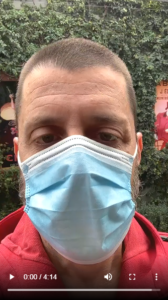
It’s Bill from recoveryafterstroke.com. We are in stage 3 lockdowns here in my home state of Victoria in Australia. It’s the second round of stage 3 lockdown so we had about a month where restrictions were eased.
And then because of a spike in the numbers of COVID-19 positive tests, we have gone back into stage three lockdown, which means that we can only leave home for essential shopping, caring of others schooling, if it can’t be done at home and work if it can’t be done at home.
Bill Gasiamis 0:34
And this has made people a little bit cranky and understandably so. Now, the other thing that they have recently announced is that as of tomorrow, we must wear masks whenever we’re in public compulsorily. And if we don’t we risk a fine. Now, I’m at home, and the restrictions haven’t started yet. So I’m not wearing my mask at home.
Bill Gasiamis 1:00
But I think it’s a great idea to wear a mask. Now, I also understand that some people will not be able to wear a mask because of different conditions and different issues that they have. So that’s okay too. And we don’t need to judge those people, we just need to be understanding. And we should not jump to conclusions about what it means when other people aren’t wearing a mask.
Bill Gasiamis 1:26
Now, my issue with all of this is that there seems to be a lot of fear being created by the regular news channels news and TV channels. And these guys tend to create fear so that people can watch what I wanted to do was break some of the myths around COVID-19 and not from the perspective of a medical type of discussion because I don’t know that type of discussion. I believe that COVID-19 is real I don’t know whether it’s any worse or better or different than any other flu or bad flu.
Bill Gasiamis 2:06
I expect that it’s worse because it seems that more people are affected more rapidly. So I’m going with that and uncomfortable with that. But there is some reports that COVID-19 is causing stroke in some patients. And it’s not being reported that potentially other flu are also causing from time to time stroke in some patients.
Bill Gasiamis 2:27
And there could be a whole bunch of underlying issues that those patients have, and that’s why the flu is causing stroke. So I just want to create a little bit of calmness around the issue in the stroke survivor community that if they get COVID-19, they’ll probably have another stroke. I don’t think that’s the case. I think it happens in very rare instances.
Bill Gasiamis 2:52
But what I want to do is ask you about your COVID-19 experience. Do you know somebody that has had COVID-19 How are they going? How have they recovered? What was their experience? Or have you had COVID-19? How are you going? And how have you recovered and what has been your experience? So, if we have this conversation in the comments section, then we can allay some of the concerns that are going out there that are from sources like TV news.
Bill Gasiamis 3:22
Because these guys create a buzz around problems and cause angst where it’s not necessary to create angst because it impacts people in a negative way. However, they do that to get the ratings. So also, I wanted to let you know that I’ve just released Episode 107. With Sheri McIntyre, Sheri wrote a book called The Compassionate Snob where she talks about her stroke experience.
Bill Gasiamis 3:47
And it’s a great episode Sheri talks about how she is a better person because of the stroke which is a really interesting thing to hear from somebody who’s experienced a life threatening situation, but she tells me that she’s better for it and she’s a great laugh and we’ve had a great time in the interview. So head out to recoveryafterstroke.com and check out the episodes that are available.