
Aphasia and Apraxia After Stroke: Michelle Clemens’ Nine-Year Fight to Get Her Words Back
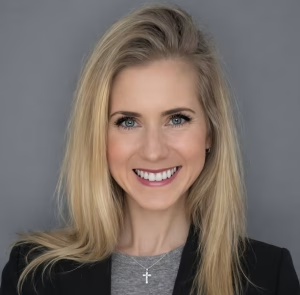
At 25, Michelle Lee Clemens had the career she’d been planning since she was eleven years old. She was an Emmy-nominated news anchor and reporter in Green Bay, Wisconsin. She ran marathons. She wrote her own stories. Talking, as she puts it, was her life.
Then a heart infection called endocarditis set off a chain of events that almost ended it. Her vision blurred. Specialists floated theories: leukemia, diabetes, cancer, rheumatoid arthritis. One doctor drew twenty-three vials of blood. Another gave her injections in both eyes. Weeks later, pain in her calf led to blood thinners. And when she arrived at a Green Bay emergency room feeling desperately unwell, the doctor’s first assessment was that Michelle was having an anxiety attack.
Her father, a paramedic and firefighter, pushed back: “No, it’s real.” A CT scan proved him right. Michelle had bleeding in her brain. She was flown to a larger hospital, underwent three brain surgeries, and spent a week in a coma. At one point, her pupils were fixed and dilated.
“I was dead, honestly.”
When she woke up, her hair was gone, part of her skull was gone, and so was her speech.
What Are Aphasia and Apraxia After Stroke?
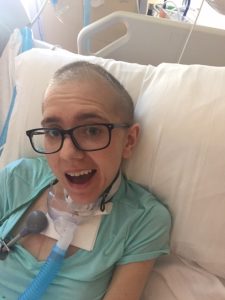
Michelle lives with two distinct conditions that often appear together after a stroke.
Aphasia is a language disorder. It affects a person’s ability to produce and process language: speaking, understanding, reading, and writing. What it does not affect is intelligence. Michelle remembers everything about her journey with unusual clarity. As she explains it in this episode:
“In my brain, I’m fluent.”
The words exist, fully formed. Getting them out is the battle.
Apraxia of speech is a motor planning disorder. The brain knows the word it wants, but struggles to coordinate the precise muscle movements needed to say it. For Michelle, the combination means a conversation involves constant, visible work: finding the word, producing it, then checking it was the right one.
During the interview, Bill offers a description Michelle immediately confirms: the word is here in the mind, but it’s not here, at the mouth.
“It’s very frustrating. But it’s me
Living With Aphasia: The Parts Nobody Sees
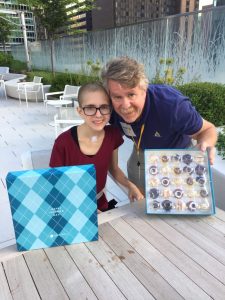
Michelle describes challenges that rarely make it into clinical descriptions of aphasia.
Fatigue changes everything. Earlier in the day her speech flows more easily; by mid-afternoon, after teaching three exercise classes, the effort of talking compounds. Writing was affected too after the stroke, she says, her writing “was a joke,” which mattered for a journalist who wrote her own scripts.
Then there’s the loneliest part. Asked about the hardest thing she faces beyond speech itself, Michelle names friendship. Her close friends live in Washington and Green Bay, not nearby, and building new friendships is difficult when conversation itself is the barrier. A lunch invitation sounds simple, but when speaking is hard work, connection stays shallow. People judge. Some assume the halting speech means lost intelligence. It doesn’t.
Yet the same woman who names that isolation also describes cruising as her favourite therapy, talking with international crew members who speak English as a second language, where everyone communicates imperfectly and nobody judges.
“Talking is therapy.”
Recovery Beyond the Plateau
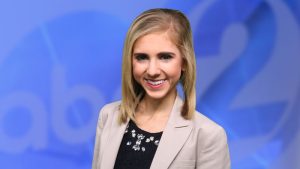
Michelle was told what many stroke survivors are told: that recovery plateaus, that progress stops. Nine years on, she is still disproving it.
Not even a year before this interview, she decided to start eating with her affected right hand. In July 2025, year eight of her recovery, she flew to Denver for a week-long meditation program and describes the improvement in her hand afterwards as “unbelievable.” She has tried dry needling. She still attends speech therapy, having started with twenty-six weeks at Northwestern, and keeps working toward the fluency she is determined to reclaim.
Her license plate reads DETERMINED.
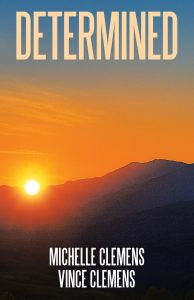
Today Michelle works four jobs: personal trainer and group instructor at her local gym where she coaches other stroke survivors, documentary producer, motivational speaker, and author. She wrote her book about her story alongside her father, Vince, who wrote his own account of the same events; for him, she says, the early-morning writing was its own therapy. In 2027, she’ll present her story at Lambeau Field in Green Bay.
What Michelle’s Story Offers Other Survivors
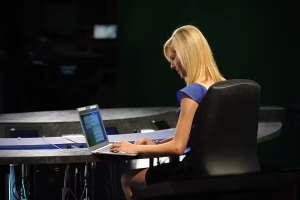
Three things stand out from this conversation.
First, self-advocacy can be lifesaving. Michelle’s brain bleed was initially read as anxiety. Her father’s insistence on a scan changed the outcome. If something feels wrong, keep pushing.
Second, the plateau is not a deadline. Michelle’s hand function improved in years eight and nine. Recovery timelines are longer and more open than many survivors are led to believe.
Third, communication is bigger than fluency. Michelle gets her message across in jumbled order and all and asks mainly for what every person with aphasia deserves: patience and a conversation partner willing to wait.
Bill has written about his own version of this long arc of recovery in his book, The Unexpected Way That A Stroke Became The Best Thing That Happened, which shares ten tools for recovery and personal transformation – you can find it at recoveryafterstroke.com/book.
You can find Michelle’s book and speaking information at michelleclemens.com, and her book is also available on Amazon and Barnes & Noble.
If this show has helped you in your own recovery, you can support it at patreon.com/recoveryafterstroke.
This blog is for informational purposes only and does not constitute medical advice. Please consult your doctor before making any changes to your health or recovery plan.
Michelle Lee Clemens – The News Anchor Who’s Winning Her Words Back (Interview)
A news anchor’s stroke at 25 was dismissed as anxiety. She woke from a coma unable to speak. Nine years later, she’s proof recovery never stops.
Links:
MichelleClemens.com
Recoveryafterstroke.com/momentum
Recoveryafterstroke.com/book
Patreon.com/recoveryafterstroke
Highlights:
00:00 Introduction to Aphasia and Apraxia After Stroke
03:27 The Day of the Stroke
12:32 Life After the Stroke and Writing a Book
15:21 The Journey of Communication and Aphasia
23:37 The Role of Family and Community Support
28:09 Navigating Relationships and Social Connections
31:01 Therapeutic Approaches and Personal Growth
35:43 The Power of Storytelling and Future Aspirations
46:30 The Journey of Recovery
Transcript:
Introduction to Aphasia Aphasia and Apraxia After Stroke
Michelle Lee Clemens (00:00)
I have no friends. I I I understand. I I
I have a conversation with myself and my brain, but speaking is hard and we are going to lunch or whatever. Well I wanna it’s nothing because it it’s it’s
It’s no close it’s a cl it’s not a close relationship.
Bill Gasiamis (00:33)
Welcome back to Recovery After Stroke. My guest today built her entire career on her voice and then over the course of one week lost it. before we get into it, I want to be up front about something. This conversation has been edited, not heavily, but edited because of the exact challenge Michelle is living with aphasia and apraxia.
Making it harder to get words out, and a light edit helps the conversation flow so you can follow it more easily. Even so, parts of this still take a bit more patience to follow than a normal conversation. So I’d ask you to stay with it anyway. What you’re doing as a listener in those moments, waiting, rereading a sentence, letting somebody find the word.
Is a small taste of what Michelle does every single time she opens her mouth. If you live with aphasia yourself, I think you’ll find something encouraging in that. And if you’ve never really understood what aphasia is,
you’re about to get a better sense of it than any definition could give you. Either way, this is one worth passing on to somebody else. And a quick note before we dive in, if you’re feeling stuck in your own recovery, I now offer one-on-one coaching for stroke survivors. It’s not therapy or medical treatment, it’s lived experience support, structure, accountability.
And someone who’s actually been where you are. Having survived three strokes myself, I only work with a small number of people at a time, so it stays meaningful. You can apply at recoveryafterstroke.com/momentum.
And one more thing. If this show has given you something for your own recovery, my book, The Unexpected Way That a Stroke Became the Best Thing That Happened, is available at recoveryafterstroke.com/book. And if you’d like to support the show directly, you can do that at Patreon by going to patreon.com/recoveryafterstroke.
Here’s my conversation with Michelle Lee Clemens.
BIll Gasiamis (02:39)
Michelle Clemens, welcome to the podcast.
Michelle Lee Clemens (02:41)
Thank you.
BIll Gasiamis (02:44)
Michelle, tell me a little bit about what life was like before the stroke.
Michelle Lee Clemens (02:49)
I was a news anchor and reporter in Green Bay, Wisconsin, USA. And my life was awesome.
The Day of the Stroke
My reporter life was really weird, random.
I’m an EMMY nominated journalist and I loved running. I have I ran six marathons, a lot of half marathons.
and my life was sweet and yeah.
BIll Gasiamis (03:35)
Excellent. Busy full life.
Michelle Lee Clemens (03:38)
Yes, definitely. I I
grateful, okay, and still but I mean my life was peaceful and I have no surgeries, no I hated needles. I mean, my goodness. I didn’t have my ear pierced because I was that scared. Okay. But yeah.
BIll Gasiamis (04:08)
You haven’t pierced now.
Michelle Lee Clemens (04:10)
Yes, yes, I have three okay. Let me let me Okay, I have t c two coils, two plates and a lot of screws.
BIll Gasiamis (04:27)
Okay, understood. All right, so we’ll talk about those in a moment.
What was your age when you had the role as a news anchor?
Michelle Lee Clemens (04:38)
Twenty two.
BIll Gasiamis (04:39)
And how old are you now?
Michelle Lee Clemens (04:41)
thirteen four, but I my accident was five. Yeah.
BIll Gasiamis (04:49)
25,
you don’t look a day over 16. Like you have a very youthful appearance.
Michelle Lee Clemens (04:57)
I know, right?
BIll Gasiamis (04:59)
So you had a stroke at 25. Tell me about what that day was like and what happened.
Michelle Lee Clemens (05:05)
My dad drove to the hospital because I had endoritis. It’s a heart infection. And in April I have the heart infection and I was fine and
I’m going home my dad was here or in Green Bay and
My vision was weird. I went to a eye doctor and he said a different doctor.
I went to a rectus specialist and he said maybe leukemia or diabetes or cancer or RA and my mom has RA. it’s yes, sorry. And
BIll Gasiamis (06:12)
All right, is that rheumatoid arthritis?
Michelle Lee Clemens (06:16)
And I went to the RA doctor and the doctor said maybe first thing first we need to have blood, okay?
The doctor took twenty three vials of blood.
BIll Gasiamis (06:38)
Wow.
Michelle Lee Clemens (06:39)
To rule out a a infection okay? It was ten minutes, mind you, okay? It was a long time. anyways, I I had a EEG or whatever. and my first EEG or and I had a heart infection.
condition or heart infection. Two days after I went to the eye doctor a rude a different eye doctor and I had two shots in my eyeballs.
BIll Gasiamis (07:30)
2, 1
Michelle Lee Clemens (07:31)
Two shots in my eyeballs. Yes.
BIll Gasiamis (07:34)
injections
which you don’t like.
Michelle Lee Clemens (07:39)
Well, exactly, but I it’s it’s exactly. And
BIll Gasiamis (07:44)
to do with those shots?
Michelle Lee Clemens (07:46)
I was
not seeing a lot. I was a news anger and I needed to see the problem proper and I didn’t see well. Yeah. And my boss was furious. I have no choice. And
BIll Gasiamis (07:48)
Uh-huh.
Michelle Lee Clemens (08:12)
That happens. And anyways, three or one or two weeks ago I had a pain in my calf. And my dad is a paramedic and fireman. And dad, I’m not feeling
Well, I and my dad and I went to the ER and he the doctor said I’m we need to s have blood thinners. Okay. I have no idea but doctors said right and three days after
my dad drove to a different appointment and my or me and I didn’t see the one and
Late I had my brand new medicine.
Dad, I’m not feeling good. And okay, my dad said, maybe five minutes we’re figure it out.
We drove to the ER in Green Bay and
The doctor assumed the doctor said Michelle has a anxiety attack.
BIll Gasiamis (09:49)
gosh, he thought you had an anxiety attack.
Michelle Lee Clemens (09:51)
Right. And my dad said, No, it’s real. And okay, fine. the doctor had a cat stat stand and I had blood in my brain. I flew
to a great possible for my care. I I have
I no sorry.
was bald. I was I mean I
BIll Gasiamis (10:34)
You had,
you had brain surgery.
Michelle Lee Clemens (10:37)
Yes. Brain surgery. three times. I was
BIll Gasiamis (10:43)
Did they remove your skull? Yep.
Michelle Lee Clemens (10:47)
Yeah, and I was in a coma for one week. I the doctor wa my brain wa my sorry my eyes were fixing dilated. I was dead, honestly.
and the doctor said
really don’t know. And my dad said
This doctor fix hard to fix me and I am a walking talking miracle. my speech was
gone. And s and I mean I have a I mean I have apraxia and aphasia and s I have speech therapy twenty six week. I love it. Go northwestern but anyways I am determined to have
fluency and I mind you I was a news anchor and reporter talking was my life I mean I mean come on and I remember all of this things a lot of people you are not remembering after
BIll Gasiamis (12:12)
Hmm.
Life After the Stroke and Writing a Book
Michelle Lee Clemens (12:32)
memory is so clear. I mean still I have s post traumatic stress disorder because it is that clear. And I mean I am I wrote a book because
story is so powerful. and I
It’s right here. I mean my my memories are so clear and I am My license plate is determined. I mean, I am determined.
BIll Gasiamis (13:04)
Determined
Well done.
Ha
Great
stuff. Tell me about waking up from your stroke and then realizing that there’s something serious going on. Your hair, your beautiful golden hair is missing and skull was missing and you couldn’t talk. that would have been difficult. How difficult was that?
Michelle Lee Clemens (13:17)
I
I I have no idea but my hair? What happened?
Okay. Maybe a car accident.
I have I mean what I mean for my IV wha what what happened? I mean really what happened and I mean I have
idea and later
my parents said you have aphasia huh what is that i mean honestly and i have no idea i mean it’s a cancer i don’t know i i have what happened and later i realized but i had no have glas contacts and
my vision was off. I needed glasses. And then it was a hot mess, but I was so tired. every ounce.
BIll Gasiamis (14:38)
So you also couldn’t see.
Messing with it.
Can you describe what it’s like to have aphasia? It’s actually aphasia awareness month at the moment. So can you explain what it’s like? Because some people who come across you who don’t know about a stroke and don’t know about aphasia think that you lost your intelligence or something, but you remember everything, your intelligence is intact. The challenge that you have is getting words out. Is that getting words out difficult?
Michelle Lee Clemens (14:53)
Yes, yes.
Yeah.
Exactly.
BIll Gasiamis (15:16)
both verbally and written as well? Is it difficult to write the words as well?
The Journey of Communication and Aphasia
Michelle Lee Clemens (15:21)
Yes. I mean it’s varies. but yes, it’s it’s annoying, okay? Because I love to talk, okay? I mean talking talking was my life. I decided that I am going to anchor the news. I was eleven.
Okay? I was so excited. I mean, yeah. And I mean why not? Anyway, sorry. I await my tradition, aware not sorry, aphasia is
I mean definition, I’m sorry, but it is maybe it is
BIll Gasiamis (16:10)
Hmm.
Michelle Lee Clemens (16:16)
Okay.
Okay, there it is.
Sorry.
BIll Gasiamis (16:21)
No, it’s okay. Take your time.
Michelle Lee Clemens (16:22)
Okay.
My bad.
I’m really sorry.
It’s a different strip. There it is.
Okay.
Not quite.
my goodness. I’m really sorry, hold on. Okay. Okay, I got it. Sorry. I have a indivisible invisible disabilities. aphasia is a language disorder that a person
BIll Gasiamis (16:34)
No stress about all good.
Michelle Lee Clemens (16:57)
Capability to to communicate. And what does that mean? I mean
We know but we are not talking because it is so it’s it’s
Not in jumbling, but I mean it’s it’s
BIll Gasiamis (17:24)
So is the word here, but it’s not here. But not here.
Michelle Lee Clemens (17:26)
Yes, right here. Right here. Sorry. Right
yes. It it it’s it’s it’s very frustrating. but it’s me
BIll Gasiamis (17:43)
Okay, so you have worked really hard to get to this point since the stroke. So nearly nine years now. And when you woke up, did you have any of this version of conversation that you have now?
Michelle Lee Clemens (17:49)
Yes, yes.
n I mean my I not really no. I I mean I was I didn’t
BIll Gasiamis (18:06)
you
Hmm.
Michelle Lee Clemens (18:14)
And I had to write, okay, but my writing was a joke. I mean still I have I have no idea. yeah.
BIll Gasiamis (18:30)
Hmm.
So
that’s cool. So how do you go about your day now? What is your day involve? I know during the week that you would have therapy, speech therapy and all that kind of stuff, but how do you occupy your time?
Michelle Lee Clemens (18:46)
Well, good question. I have four jobs. yeah. I am a personal trainer and instructor in at a local gym and I liked pe I like to help people with exercise. I
I have a lot of stroke survivors and I mean you can do it. I did. I was almost dead. I mean I mean I have what I had a one personal living, honestly. And I am a walking talking miracle and I am a documentary producer and a motivational speaker and
A author.
BIll Gasiamis (19:42)
Well, sounds like you’re still keeping very busy just like you were when you were a new.
Michelle Lee Clemens (19:47)
Yeah, I
exactly. I mean I I mean mind you, I had no job until a year ago. And I’m grateful.
BIll Gasiamis (20:03)
Was it difficult to go back to work at the gym as an instructor? it, like, was it really tiring and stuff?
Michelle Lee Clemens (20:07)
Well
Huh.
yeah, it’s still. But I mean, it’s my work is really relaxed, honestly.
BIll Gasiamis (20:21)
it’s
small amount of hours over two days. So it’s easy to manage.
Michelle Lee Clemens (20:24)
Exactly.
Exactly. Exactly. I mean and the other w job is a online job.
And it’s very awesome, huh?
BIll Gasiamis (20:39)
How would you describe the support that you had from your family? I know your dad, Vince, is your co-author. Tell me about how that went.
Michelle Lee Clemens (20:47)
Yes, ex my
well my dad and my me are has a different story. I wrote my story and my dad has a different story. yes, but my family was very
to support or still. I’m honestly living in my parents’ house because I’m still
not I’m not wealthy, okay. I need money, first of all. And yes. But I mean I’m my book is not I mean I like my book. I’m not spending I mean not spending I mean my goodness. My profit was two dollars.
BIll Gasiamis (21:44)
doesn’t make a lot of money.
Yep, I believe that.
Michelle Lee Clemens (21:52)
Yes.
Yes. Or yes. I am not I mean I love to read or not. I love to write. I mean I am not whatever. But it was a great thing for me. And my dad said it’s a great it was a great thing for my dad because
It’s honestly it was therapy, okay? And he early morning he wrote the pod, not pod, sorry, blog and it was a great thing for my dad.
BIll Gasiamis (22:42)
Yeah, great, great way to get it out and kind of put it out on paper.
Michelle Lee Clemens (22:45)
Exactly. And then and
then I mean I I was a news celebrity in Green Bay and a lot of people a lot of people said
I I was I’m praying for you or or something else. I mean, they the community was awesome in Green Bay. And and my home t ho hometown honestly. My hometown was very supported for me and I’m grateful.
BIll Gasiamis (23:13)
a lot of well wishes.
Mm-hmm.
Mm-hmm.
Yeah, some of those hard times. How do you get through those? Did you seek out counseling? Did you speak to therapists in other areas other than just your family?
The Role of Family and Community Support
Michelle Lee Clemens (23:37)
Well, I tried. I mean I I thought I am a
I am living. I’m not caring because I am a walking talking miracle. And I tried therapy and I didn’t like they were sorry but not effective. I am I my outcome or not outcome but my personality is so
Awesome, I don’t know what it’s very, but I had an accident. Okay. Keep going, okay? I am determined. And I mean it’s a sucky.
BIll Gasiamis (24:13)
Yeah.
Move on,
So therapy is,
formal therapy is kind of not your thing. It’s you’re into doing projects, writing books, going to the gym, helping people out, doing rehab, overcoming your personal challenges.
Michelle Lee Clemens (24:37)
Yeah!
Well yes.
Yeah. I mean I had P T O T and speech and then I still have speech. But
I mean, my my mental is really good. I am a yes, my yeah. Yeah, I mean I am really grateful and it’s a it was a messed up situation, okay. I was I spoke for gr my graduate or
BIll Gasiamis (25:00)
You make your health. That’s awesome. It’s very good.
Michelle Lee Clemens (25:22)
High school graduation and college graduation. And my speech is gone. But it’s I mean it’s funny but not. And I mean sorry.
BIll Gasiamis (25:32)
but weird.
It’s funny but weird at the same time. Like it’s bizarre, isn’t it? You’re relying on your speech for your everything. And then the only thing that goes away is your speech. What about physical deficits? Do you have any stiffness or pain or anything like that?
Michelle Lee Clemens (25:37)
Exactly. Exactly. And
Every.
I was paralyzed with my right hand or everything. And I still have a lot of tightness and it’s my right everything is different. I mean
BIll Gasiamis (26:16)
I see.
Michelle Lee Clemens (26:17)
Yeah. But I mean, I’m using it. I mean it’s I have I am able to drive. I I mean it’s I have a a sp wheel. And yeah. It’s yeah. It it it’s awesome. It was on Amazon and I mean it’s
BIll Gasiamis (26:34)
a little one of those little dials on the steering wheel.
Michelle Lee Clemens (26:46)
I really I’m grateful.
BIll Gasiamis (26:50)
What are you grateful for specifically?
Michelle Lee Clemens (26:54)
my life. I mean I was dead. I mean honestly I was dead. I remember a lot. And
I
My God is amazing.
BIll Gasiamis (27:05)
What’s the most difficult thing that you face other than the challenge of your speech? What else is the most difficult thing?
Michelle Lee Clemens (27:15)
goodness. I mean my speech, but talking well I don’t really I mean I I didn’t have friends yeah but I have no friends. And I mean is what it is. I mean once in a while, yes, I mean it it’s not okay.
BIll Gasiamis (27:30)
friends.
Michelle Lee Clemens (27:43)
Hear me out. I’m saying I have friends but they are living in Washington and Green Bay and not close by. And I’m I’m used to it. I don’t care. I I
It’s okay. My speech is sorry. My speech is a problem because
Navigating Relationships and Social Connections
BIll Gasiamis (28:10)
Is it? Is.
Michelle Lee Clemens (28:16)
I have no friends. I I I understand. I I
I have a conversation with myself or and my brain, but speaking is hard and I w let me we are going to lunch or whatever. Well I wanna it’s nothing because it it’s it’s
It’s no close it’s a cl it’s not a close relationship.
BIll Gasiamis (28:45)
Yeah, so aphasia is a barrier, a barrier.
Yeah. So
aphasia is a barrier to having meaningful conversations with people that create friendships.
Michelle Lee Clemens (29:01)
Right, and I mean I had a boyfriend, he was
not normal or not no no sorry yes but he was not he didn’t have aphasia. What is that? I mean he wasn’t really normal. And we broke out I mean three it wa I was sorry
three years for the relationship trip. Actually in Sydney, Australia. Yes. On a cruise, mind you. Don’t ask. It was a hot mess, but a different topic, huh?
BIll Gasiamis (29:42)
three years ago.
You broke up in Sydney, Australia?
Okay, so I understand. So you had a boyfriend and you were together for three years and you broke up on a cruise together when you were visiting Sydney, Australia.
Michelle Lee Clemens (30:07)
Yes. Yeah.
Yes. Yep. Yeah. Yeah. I I
BIll Gasiamis (30:18)
Okay, it was a hot mess. Absolutely. I love I know that’s
not a good reason to remember Sydney, Australia. That’s Yeah, you love it anyway. Okay, good.
Michelle Lee Clemens (30:26)
Love it. I love it. I mean, I
BIll Gasiamis (30:30)
playing there. All right. Next time. Don’t forget. So you’ve had quite the journey. It has been a long nine years and you had to overcome.
Michelle Lee Clemens (30:31)
Okay.
You’re right. Exactly.
BIll Gasiamis (30:46)
your right side deficits. So you’re, you’re the way your hand works and your body worked on the right side. You had to overcome speech. have some challenges with relation. you had a trach. Yep. You have some challenges with communicating and then connecting with people as a result of that. I didn’t actually ever consider because I’ve never had aphasia and I’ve never
Therapeutic Approaches and Personal Growth
Michelle Lee Clemens (30:49)
Yeah.
Yeah.
Nice. Yeah.
Right.
BIll Gasiamis (31:16)
It’s never come up in the conversation. I didn’t consider the challenge in creating friendships and relationships with people because the speech is a barrier to having a meaningful conversation over lunch or something like that. And most people, I imagine most people come to lunch, want to make it about themselves. They want to make sure that they talk about themselves and that you talk.
Michelle Lee Clemens (31:28)
yeah.
BIll Gasiamis (31:45)
back about them and there’s a nice circular conversation, but they don’t get that from you perhaps. And they’re not patient and they don’t understand. And they might think that you’re not intelligent and they might judge you.
Michelle Lee Clemens (31:49)
Senate.
Nope. No.
yeah. A lot of judge. I mean Yeah. I mean
BIll Gasiamis (32:04)
A lot of jacking it.
Wow. Well,
I hope this interview raises some awareness and then decreases the amount of judgment and makes people more patient with people who have aphasia. It would be fantastic if we were just able to all get along, even though we couldn’t have regular version of speech or conversation as others. It’s something interesting and different to sit down with somebody who has aphasia.
Michelle Lee Clemens (32:18)
Thank you. Thank you.
BIll Gasiamis (32:36)
and wait for them to make a sentence and spit it out so that you can create a space for that to happen, also so you can have a different version of a conversation. Like all conversations are pretty the same. I talk, you talk, I talk, you talk. But in this case, it’s a different experience to have a conversation with somebody who has a facial. You have to often be quiet and just wait.
Michelle Lee Clemens (33:06)
Yes, exactly. I mean it is I mean, maybe it’s very p annoying and I don’t really know but I my brain is fluent. I mean in my brain I’m fluent. I mean and I am not fluent. I am I I mean, it was a pot it it was a hot mess.
BIll Gasiamis (33:09)
Thank
Michelle Lee Clemens (33:34)
But now I have speech therapy and y I’m grateful. And
BIll Gasiamis (33:39)
Yeah. And it sounds
like you can communicate most things. You can communicate your needs. You can communicate what’s important. It may come out a little jumbled and not in the right order, but it comes out and you can get the message across most of the time.
Michelle Lee Clemens (33:48)
Yeah.
Yeah, I mean it’s weird but hear me out. I loved cruising because a lot of people have a different language mean they live in They the workers live in
China or Jap Japan or yeah it’s different countries. my speech is so clear because I’m talking English and I’m not my speech is not the greatest but
BIll Gasiamis (34:29)
countries.
Michelle Lee Clemens (34:47)
they understand and my goodness thank you i mean it’s very i love cruising because it’s very first of all it’s fun but also it’s not fair but free but therapy for me talking is therapy
BIll Gasiamis (35:12)
therapy.
Yeah, so you’re on the cruise, people are from different nationalities, different cultures, different backgrounds. And when you speak in English, you speak well enough for them to understand and they speak well enough for you to understand and everyone gets along and it’s all fine. Yeah, do you speak when you’re tired? Does your speech get a little harder as opposed to when you’re fresh earlier in the day in the morning?
The Power of Storytelling and Future Aspirations
Michelle Lee Clemens (35:31)
Exactly.
Yes,
yes, definitely. I mean, right now I’m awake, but I mean most of the time, I mean three a at three I’m okay. I’m done. I mean not really, but I need maybe f more food. I don’t really know. I have a lot of
BIll Gasiamis (36:07)
rest, the rest and recovery.
now, yeah, by now your day is kind of winding down and you’re quite tired.
Michelle Lee Clemens (36:16)
I mean, yes, it today I taught to exercise three exercise classes, but and my speech is better with talking. yeah. but maybe tomorrow I’m so tired. I am
I mean n at three I did coffee and b and and I mean yeah.
BIll Gasiamis (37:01)
I understand. So what about your right side at the gym? How do you go managing the right side challenges with gym work?
Michelle Lee Clemens (37:14)
Well, good question. I have I am a personal trainer and I am very strong. I mean mind you I my body is t petite. but I am so strong with my well I take a
The left str is very very strong. The right, I have no idea. I mean, I am here. my phone, it’s very heavy for me. the water bottle, it’s I have no idea.
BIll Gasiamis (37:59)
Okay.
Yeah, okay. So your left side, quite normal, quite strong, really kind of able to lift things, do things. The right side, not so much, a little weaker. A phone is heavy and lifting your water bottle with your right hand is probably not a good idea.
Michelle Lee Clemens (38:14)
yeah.
No.
It
no, I mean I I mean
Not not even a year ago. I took no, sorry, I decided I’m going to eat with my right hand. Okay? It was hard, but I get it. And I mean I I didn’t have a clue, but
BIll Gasiamis (38:49)
Hahaha
Michelle Lee Clemens (38:56)
I’m really excited because I have a a new tool. I mean, yeah.
BIll Gasiamis (39:03)
Yeah, so your hand
is still improving after nine years.
Michelle Lee Clemens (39:08)
yeah, definitely. And my speech yeah. I mean, I didn’t talk. I mean, most of the time the doctors or speech therapist or whatever. I like speech therapist, mind you. But I I mean you’re progr not progressing it’s useful. Okay?
BIll Gasiamis (39:10)
and your speech too.
They say that you’ve hit
the plateau, you’re not progressing.
Michelle Lee Clemens (39:35)
Yes,
co. And no, I am determined, mind you. and yeah.
BIll Gasiamis (39:44)
Unbelievable. So a lot of people watch this show and listen to the show and they’ve been told by doctors after six months that they’ve hit a plateau. They’re not going to continue recovering and they have to give up and all that kind of stuff. And it’s crazy to hear, but your proof that your right hand is starting to show improvements and starting to become useful again. And you have started using it to eat.
Michelle Lee Clemens (40:11)
Yes. And
BIll Gasiamis (40:13)
Do you drop all the food or are you doing a good job with it?
Michelle Lee Clemens (40:17)
Yeah,
I mean I am using my fork and my spoon, not the f knife. Save it first. but don’t it’s weird but hear me out. I different therapies. Okay. I had drive needling with for my
everything honestly for my hands. Okay, fine. And a week a er no thing. in
July? Yeah, July twenty twenty-five. I flew to Denver to have a meditation with for for a week. My hand is unbelievable.
Amazing after meditation. It’s so weird. It’s I mean, it’s very weird, but it’s helping. And I I mean most of the time I am meditating and it’s helping me.
BIll Gasiamis (41:23)
Right.
That’s excellent. Meditation is really helpful. It changes your body. It relaxes things and it gets blood flowing and it gets the nervous system relaxed. And then if it gets you out of your head, you don’t overthink things. Things flow more easier. Does speaking require you to do a lot of extra thinking about how you’re going to get the word out?
Michelle Lee Clemens (41:42)
Yeah.
BIll Gasiamis (42:11)
or how does that happen? Because I see you have the idea of the words and then I see you say that and then I also see you, once you’ve said the word, confirm that you said the correct word.
Michelle Lee Clemens (42:26)
I have no idea. I’m sorry, but I have no idea because I’m fluid with my for my brain or whatever. I am not sure.
BIll Gasiamis (42:28)
Okay.
That’s okay. You don’t need to have that’s all right. That’s fine. Perfect. So now let’s talk about the book briefly. You, how long did it take to write?
Michelle Lee Clemens (42:39)
Sorry.
Yes.
Well, it was a long time because I have post traumatic stress to order and my vision is really clear and I stop and then rescrew and then stop because it’s a big deal.
BIll Gasiamis (43:11)
So many years.
Michelle Lee Clemens (43:13)
Yes, many years.
BIll Gasiamis (43:15)
And what’s the book about?
Michelle Lee Clemens (43:17)
My story. My I was a news anchor and reporter and and this happened. and I remember everything. I mean very it’s weird but it’s awesome. And my my book is my story.
BIll Gasiamis (43:45)
your story. It’s a lovely idea to have a book. I appreciate that because I wrote a book for a similar reason to help other people, to inspire them. It was therapy for me too, to get that stuff out and put it in writing. when I sell the book, there’s not a lot of profit. There’s not a lot of money, but it’s almost not about that, is it? It’s really not about that.
Michelle Lee Clemens (43:45)
I mean, yeah.
And I’m I I bought I mean a not a lot of books but a lot of books. I have in twenty twenty seven I am presenting my story in Lambo Field in Green Bay, Wisconsin
USA and I’m presenting my story. I mean it’s Lambo Feel. Okay, awesome. I mean I like to have I like motivational speaker gig
BIll Gasiamis (44:56)
Yeah.
You’re also speak motivationally. also have that little gig. That’s awesome. So you also have a website where you can go and get some information and get the links to your, the different things that you’ve done and go and see your reels and go and grab a copy of the book. What is the website? Tell me the website.
Michelle Lee Clemens (45:08)
Yes.
Yeah, definitely.
Thank you.
MichelleClemens.com
BIll Gasiamis (45:28)
michelleclemens.com. It’s also available on Amazon and Barnes and Noble.
Michelle Lee Clemens (45:33)
Yes.
BIll Gasiamis (45:35)
Well, it is my pleasure to meet you. I really appreciate that you are determined. The book is very well labeled. You certainly appear to be somebody who’s extremely determined. I think you’re doing amazingly well to still be recovering after nine years. And it sounds like you’re very comfortable being
in the rehabilitation and the recovery path still and going for even better speech and even better hand movement.
Michelle Lee Clemens (46:11)
Thank you.
BIll Gasiamis (46:12)
And congratulations on getting back to four jobs.
Michelle Lee Clemens (46:15)
I burnt thank you. I didn’t ask, but I love it.
BIll Gasiamis (46:23)
Yeah, well done. Michelle, thanks so much for being on the podcast.
Michelle Lee Clemens (46:25)
Thank you.
Thank you. Have a good day.
The Journey of Recovery
Bill Gasiamis (46:30)
Well, that’s it for another episode of the Recovery After Stroke podcast. Thank you so much to Michelle for being so generous with a story that clearly still takes real effort to tell. If there’s one thing to take from this conversation, it’s that recovery doesn’t run on anyone else’s timeline. Michelle’s hand is still improving nine years in. Her speech is still improving nine years in. And as she put it herself, my brain.
I’m fluent. The intelligence was never in question. Only the road back to getting out of it. You can find Michelle’s book and more about her work as a speaker and documentary producer at MichelleClemens.com. It’s also available on Amazon and at Barnes Noble. If you’ve been told your own recovery has hit a plateau or you’re just feeling stuck and not sure what’s next, I offer one-on-one coaching for stroke survivors.
Structure, accountability, and support from someone who’s lived it. You can apply at recoveryafterstroke.com/momentum. If this episode helped you understand aphasia a little better or reminded you that the plateau isn’t the finish line, share it with someone who needs to hear it.
For more tools for your own recovery, my book, The Unexpected Way That a Stroke Became the Best Thing That Happened, is available at Recoveryafterstroke.com/book. And if the show has been valuable to you, you can support it at Patreon.com/recoveryafterstroke.
I’m Bill Gassiamas. Thanks for listening, and I’ll see you on the next episode.