
Carotid Dissection Symptoms: The Sore Neck Rob Shepard Almost Ignored
Written by Bill Gasiamis, a three-time stroke survivor and host of the Recovery After Stroke podcast.
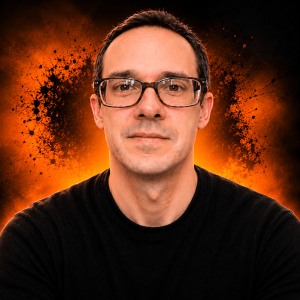
At 1:00 am on 8 December 2025, Rob Shepard was in a New Orleans hotel room, coughing. He was 41, an industrial-organisational psychologist on a work trip, and he and his wife Chelsea had just spent a full day exploring the city. He got up to find some cough medicine, slumped onto his left side, and tried to speak.
Chelsea, who used to work in hospitals, told him he’d better say something clearly or she was calling 911. He couldn’t. She made the call.
Rob received a clot-busting drug and a thrombectomy. The week before, he’d travelled alone. “If it would have happened in the hotel room when I was by myself,” he told me, “I don’t think I’d be here talking to you today.”
The Sore Neck That Wasn’t a Sore Neck
Most of us assume neck pain after lifting something heavy is a muscle problem. A few days, maybe some heat, and it goes away.
That’s what Rob assumed. In the weeks before his stroke, he and Chelsea had been moving furniture around the house, and his neck was sore. Then he caught a virus with a cough that lasted a week or two. “I just thought, I’m getting older, I shouldn’t be lifting all this heavy stuff. Maybe I slept wrong.”
The neck pain wasn’t muscular. One of the arteries in his neck had a tear in its wall: a carotid artery dissection. When the inner lining of the artery tears, blood can collect inside the wall, narrow the vessel, and form a clot. Doctors believe the force of his coughing eventually sent that clot to his brain.
“I honestly never even heard of a carotid artery dissection until it happened to me,” Rob said. He’s far from alone in that.
Carotid Dissection Symptoms Worth Knowing
Carotid dissection symptoms are often easy to explain away, which is exactly why they’re missed. In a study of 259 people with spontaneous cervical artery dissection, almost 80% had head or neck pain, and in about 70% of cases those local symptoms appeared before any stroke or TIA.
Symptoms can include:
- Pain on one side of the neck, face, or head, sometimes building in intensity
- A drooping eyelid and a smaller pupil on one side (Horner’s syndrome)
- A pulsing, whooshing sound in one ear (pulsatile tinnitus)
- Brief vision loss or other visual disturbance
- Stroke signs: weakness or numbness on one side, slurred speech, facial droop
A dissection can follow obvious trauma like a car accident, but it can also follow something as minor as coughing, sneezing, or a sudden neck movement, or happen spontaneously. People with carotid (rather than vertebral) dissection are more likely to have had a recent infection, which fits Rob’s story closely.
If neck pain arrives with any of the signs above, treat it as an emergency and call your local emergency number.
Why Younger Adults Miss the Signs
Cervical artery dissection is the most common single cause of ischaemic stroke in young adults, accounting for around 20% of cases.
Across more than 420 conversations on this podcast, I’ve heard some version of Rob’s story many times: a cough, a sneeze, a stiff neck, a trip to the chiropractor, and then a stroke nobody saw coming. You can hear another one in Annika Luke’s carotid artery dissection recovery story.
Part of the problem is expectation. “When you picture a stroke, you picture someone in their seventies, eighties, nineties,” Rob said, “not someone in their forties.” At 41, confusion at 1 am looks like tiredness. Plenty of younger stroke survivors know that thinking.
Rehab Ends. Then What?
Rob spent 23 days between the ICU, acute care, and inpatient rehab, across the country from his daughters and his home in Idaho, over Christmas. He flew home on New Year’s Eve.
His leg came back quickly. His left hand is still catching up. But the physical side wasn’t the hardest part.
“There seems to be like a good plan for the physical side,” he said. “But the mental and cognitive and identity piece… it’s not as clear.”
He went back to work after six months and found the cognitive fatigue too much by the afternoon. Crowds became overwhelming. And after an ER misread a scan and told his family he’d had a second stroke, corrected by his neurologist the next day, the “what if” fear settled in. His dissected artery is now fully blocked, with other vessels supplying that side of his brain.
If fatigue is shaping your days too, these strategies for managing fatigue after stroke are worth a look.
“Just because you can’t do something the same way doesn’t mean that those values are gone.” — Rob Shepard
A Job Description for a Life Nobody Trained You For
Rob spent his career analysing jobs, working out what each role demands and matching the right people to it. After his stroke, he realised his new life was, in effect, a new job, and it had no job description.
So he wrote one. Who You Are Now: A Stroke Survivor’s Guide to Becoming Who You Are Now is a short, practical workbook that takes survivors through:
- Naming what happened, including permission to grieve. Many survivors feel they should simply be grateful, and Rob makes room for both. (More on that in our episode on grief after stroke.)
- Untangling identity from ability. A stroke can take roles; it rarely takes values.
- A section for survivor and caregiver together, so both people can say what they’ve been carrying. (See also relationships after stroke.)
- Monthly check-ins, because recovery doesn’t end on a set date.
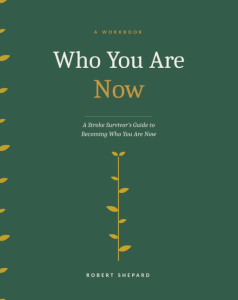
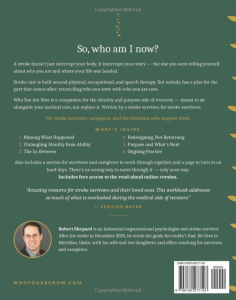
It comes as a fillable digital version and a paperback on Amazon, plus a read-aloud online version. Find it, and a free reflection sheet, at whoyouarenow.com, and follow Rob on Facebook and Instagram. If identity is the part you’re stuck on, you might also find Cassie Jewell’s episode on identity after stroke helpful.
Retiring the Word “Back”
One exercise stood out to me: retire the word “back.”
“Who I am today is never going to be the same as who I was on December seventh,” Rob said. “My hundred percent today is gonna be completely different than my hundred percent was the day before the stroke.”
Chasing your old life keeps you looking backward. Redesigning lets you build a life that fits who you are now, and even shows you what you don’t want to carry forward. According to Chelsea, Rob 2.0 is also a better cook.
Where to Go From Here
If a stroke has made your world feel smaller, my new book, Your World Doesn’t Have to Stay This Small, is a practical guide to rebuilding your life after trauma, even when you’re not ready.
For the ten tools that shaped my own recovery, read The Unexpected Way That A Stroke Became The Best Thing That Happened. And if this show has helped you, you can support it at patreon.com/recoveryafterstroke.
This blog is for informational purposes only and does not constitute medical advice. Please consult your doctor before making any changes to your health or recovery plan.
Robert Shepard: Who You Are Now – Rebuilding Your Identity After a Stroke at 41
A sore neck, a bad cough, then a stroke at 41. Rob Shepard rebuilt his life by retiring one word: back.
Highlights:
00:00 Life on autopilot at 41
03:49 Just a sore neck?
06:46 What if she hadn’t been there?
15:04 Why “I’m ready” wasn’t true
17:38 Who plans for the identity part?
29:01 Told he’d had a second stroke
31:56 No job description for survivors
42:41 Why retire the word “back”?