
Post-Traumatic Growth After Stroke: Why “Ready” Isn’t a Feeling You Wait For
“I’ll start again when I’m ready.” If a stroke has split your life into before and after, you’ve probably said some version of that sentence, maybe not out loud. It sounds responsible. Heal first, then live. But what if readiness isn’t a feeling that shows up first? What if it’s something you build, often while you’re still struggling? That question sits at the centre of a growing body of research on post-traumatic growth after stroke, and it’s the subject of this week’s mini-episode.
The Sentence That Sounds Responsible, But Keeps People Stuck
In 2012, Bill Gasiamis had a bleed in his brain at thirty-seven. A month later, he had another one. He looked fine, people kept telling him so, and he spent weeks quietly waiting for the morning he’d wake up feeling like himself again. That morning didn’t come. For most people recovering from a stroke, it doesn’t. And the longer you wait for it, the smaller your world tends to get: fewer plans, fewer risks, more of life organised around the fear of another setback.
What breaks that waiting pattern usually isn’t a feeling. It’s a small, unglamorous action. For Bill, it was a search bar: a drug prescribed to reduce brain swelling was causing sleepless nights and other side effects, and one quiet morning he opened his laptop and looked up how to reduce inflammation through diet. He didn’t feel ready. He felt terrible. But that one change gave him a bit of evidence that he wasn’t helpless, and that evidence built momentum toward the next step.
What 26 Studies on Growth After Trauma Found
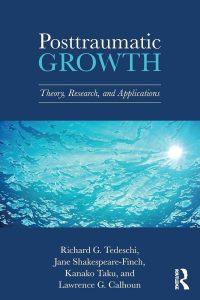
A personal story isn’t proof of a pattern, so what does the research say? In the 1990s, psychologists Richard Tedeschi and Lawrence Calhoun named this experience post-traumatic growth (PTG) and, in 1996, published the Posttraumatic Growth Inventory to measure it (Tedeschi & Calhoun, 1996). In 2019, a systematic review and meta-analysis pooled 26 of those studies. Across them, just over half of participants, about 53%, reported moderate-to-high growth after a traumatic event (Wu et al., 2019). Growth after a life-altering event is a documented, common outcome, not a rare exception.
Why Growth and Distress Show Up Together
Here’s where it gets counterintuitive. A reasonable assumption is that growth only arrives once the pain has passed. A 2014 meta-analysis of 42 studies and more than 11,000 people found the opposite: post-traumatic growth and post-traumatic distress symptoms tend to co-occur, and the relationship between them is curvilinear rather than a straight line, with the highest growth often reported by people who were still, in some sense, in the middle of their struggle (Shakespeare-Finch & Lurie-Beck, 2014). In other words, you don’t have to be finished hurting before you’re allowed to start growing.
Life Doesn’t Queue Its Disasters
Bill’s own recovery wasn’t a straight line either. In November 2014, a third brain bleed led to brain surgery, two weeks after his mother-in-law passed away. He woke up unable to walk, spent a month in inpatient rehabilitation, and took roughly seven years before returning to meaningful work. He wasn’t “ready” at any single point in that process. What changed was that he stopped waiting for readiness and learned to take the next step from wherever he was standing that day.
What the Stroke-Specific Research Shows
Does the pattern hold for stroke survivors specifically, not just trauma survivors generally? A 2026 systematic review and meta-regression pooled 10 studies covering 1,046 stroke survivors and found a significant, gradual increase in PTG scores with each month after discharge. The strongest correlates of growth were active cognitive processing (deliberately making sense of what happened) and social support (Klass et al., 2026). A related meta-analysis of post-traumatic growth after acquired brain injury found similar patterns: growth was associated with more time since injury, social connection, and lower depression (Grace et al., 2015). And when researchers tested structured psychosocial programs rather than waiting for growth to happen on its own, a meta-analysis of 12 randomised controlled trials found a modest but real increase in PTG (Hedges’ g = 0.36) (Roepke, 2015). Modest and real beats waiting and hoping.
What This Research Doesn’t Yet Tell Us
Honesty matters here as much as hope. Post-traumatic growth is common, but it isn’t universal or owed to anyone; close to half of people in these studies did not report moderate-to-high growth, and that doesn’t mean they’re doing recovery wrong. Growth is not the same as being grateful for a stroke, and it doesn’t erase grief or distress; the two can coexist. Most PTG research relies on self-report, often collected well after the event, so it tells us what people believe changed, not necessarily what changed on an objective measure. The link between social support or active coping and growth is a correlation, not proof that one causes the other. And the intervention evidence is modest, across a small number of trials, so it supports “may help,” not “will fix this.” None of this replaces professional care, particularly if distress is persistent or severe.
Two Small Things to Do Before You Feel Ready
If the research has a practical edge, it’s this: small, concrete action seems to matter more than waiting for the right internal state. Two places to start: name one specific area of your life where you’re currently waiting to feel ready before acting, and choose one step so small it feels almost silly, then take it today rather than waiting for tomorrow’s version of yourself.
If you want to take this further with your own care team, useful questions to raise include: what kind of structured support (psychological, peer, or rehabilitation-based) is available to help with “making sense of what happened,” and what social supports in your own life could be strengthened now rather than later.
Bill explores this idea at length in his new book, Your World Doesn’t Have to Stay This Small: A Practical Guide to Rebuilding Your Life After Trauma, Even When You’re Not Ready, available at mybook.to/yourworld. If stroke is your story specifically, his first book goes deeper into one survivor’s path through post-traumatic growth after stroke, and you can read more at https://recoveryafterstroke.com/book. For listeners who want to support this work directly, you can also do that at https://patreon.com/recoveryafterstroke.
This blog is for informational purposes only and does not constitute medical advice. Please consult your doctor before making any changes to your health or recovery plan.